Author: Prof. Engr. Zamir Ahmed Awan, Sinologist – Diplomat – Advisor - Consultant,Founding Chair, Global Silk Route research Alliance.(E-mail: awanzamir@yahoo.com).
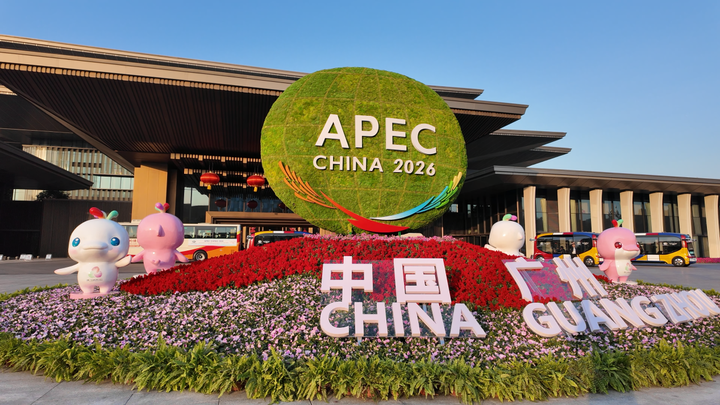
At a time of escalating geopolitical tensions, armed conflicts and economic fragmentation, the 2026 APEC gathering in Shenzhen offers China an important opportunity to promote dialogue, cooperation and shared prosperity.
Understanding APEC and its global significance
The Asia-Pacific Economic Cooperation (APEC) is a regional economic forum established in 1989 to promote economic growth, trade liberalization, investment and regional cooperation. It brings together 21 member economies, including China, the United States, Russia, Japan, South Korea, Australia, Canada and several Southeast Asian economies.
APEC represents approximately 60 per cent of global GDP and nearly half of world trade. Its decisions and initiatives therefore have implications extending far beyond the Asia-Pacific region.
An important distinction must be made regarding the November gathering in Shenzhen. The APEC CEO Summit will take place on 17–18 November 2026, bringing together business leaders, investors and policymakers. The 33rd APEC Economic Leaders' Meeting will take place on 18–19 November 2026, when heads of economies will discuss regional and global economic priorities. China's Foreign Ministry confirmed this schedule on 13 November 2026. President Xi Jinping will attend the opening of the CEO Summit on 17 November and chair the Economic Leaders' Meeting.
Unlike military alliances or formal political organizations, APEC operates through voluntary cooperation, consensus and dialogue. This makes it particularly valuable at a time when geopolitical rivalries are weakening international institutions and undermining confidence in multilateralism.
Shenzhen 2026: A meeting at a critical geopolitical crossroads
The summit comes at an exceptionally difficult moment for international relations. The world is witnessing an alarming combination of armed conflicts, strategic rivalries, economic uncertainty and declining respect for international law.
The Russia-Ukraine war continues to undermine European security and disrupt international economic relations. The devastating war in Gaza, widespread civilian suffering and allegations of genocide have raised serious questions about the effectiveness and impartial application of international law. The US-Israeli military confrontation with Iran has exposed the vulnerability of global energy supplies and maritime trade, particularly through the strategically important Strait of Hormuz.
Elsewhere, the US military operation resulting in the capture of Venezuelan President Nicolás Maduro has generated serious debate about national sovereignty and the use of force. Cuba continues to face intense American economic and political pressure, including maritime restrictions and blockade-related tensions. Meanwhile, renewed fighting involving Yemen and continuing Saudi-Houthi tensions threaten regional stability and international shipping.
These are not isolated regional problems. Their consequences extend across continents through higher energy prices, disrupted supply chains, food insecurity, inflation and declining investment. Developing economies, with limited financial resources to absorb external shocks, are particularly vulnerable.
Against this background, the Shenzhen meeting assumes exceptional significance. Although APEC is not a security organization and cannot resolve wars directly, it provides a platform where competing powers can maintain communication, identify common interests and prevent economic disagreements from escalating further.
China's preparations and the choice of Shenzhen
China has approached its APEC presidency as a year-long program of diplomatic, economic and institutional engagement rather than simply hosting a two-day summit. The preparations include senior officials' meetings, ministerial consultations, business forums and technical discussions across several Chinese cities.
China has identified three priorities: openness, innovation and cooperation, under the theme, building an Asia-Pacific Community to Prosper Together.
The agenda addresses international trade, digital transformation, artificial intelligence, energy security, food systems, connectivity, investment and sustainable development. It also seeks progress towards the long-term vision of a Free Trade Area of the Asia-Pacific (FTAAP).
The selection of Shenzhen is particularly meaningful. Designated one of China's first Special Economic Zones in 1980, Shenzhen has transformed from a relatively small border settlement into a global center of manufacturing, finance, technology and international trade.
Its development symbolizes China's experience of reform, opening-up, industrialization and technological advancement. The city offers an impressive setting for discussions about artificial intelligence, advanced manufacturing, robotics, digital trade and green technology. It also demonstrates how consistent policies, infrastructure investment, innovation and international engagement can transform an economy.
President Xi Jinping's leadership and diplomatic significance
President Xi Jinping's participation carries considerable diplomatic significance. As China's head of state and a leading figure in international affairs, he will chair the Economic Leaders' Meeting, address the CEO Summit and engage with visiting leaders.
China is the world's second-largest economy and a major trading partner for numerous APEC members. Its economic policies and international engagement have considerable implications for regional and global prosperity.
President Xi has consistently advocated multilateralism, economic globalization, an open world economy and the building of a community with a shared future for humanity. His emphasis on dialogue, mutual respect, sovereign equality and mutually beneficial cooperation provides an important political framework for the Shenzhen gathering.
His personal engagement can help create diplomatic space among leaders whose countries may disagree on strategic and political questions. Direct discussions between major powers can reduce misunderstandings, maintain communication and help prevent tensions from escalating.
However, leadership must ultimately be judged by practical achievements. The real test will be whether the summit can produce meaningful consensus despite differences among its members.
Expected outcomes: From declarations to practical cooperation
The most important expected outcome is a political declaration providing direction for future APEC cooperation. Several areas deserve particular attention.
First, revitalizing international trade. APEC members need to resist protectionism, unilateral trade restrictions and economic fragmentation. Progress towards FTAAP and stronger support for the multilateral trading system could restore confidence in international commerce.
Second, artificial intelligence and technological cooperation. AI, robotics, digital transformation and advanced manufacturing are reshaping the global economy. Cooperation on technology standards, digital infrastructure, innovation and capacity-building can help ensure that developing economies are not left behind.
Third, connectivity and investment. Greater cooperation in infrastructure, transport, logistics, energy and regional supply chains can strengthen economic integration and create opportunities for small and medium-sized enterprises.
Fourth, inclusive and sustainable development. Economic growth must benefit ordinary people, not merely large corporations and wealthy economies. Food security, affordable energy, vocational education, employment, climate resilience and access to modern technology deserve greater attention.
Bridging economic and geopolitical divides
One of APEC's greatest challenges is the enormous disparity among its 21 member economies. While some possess advanced industrial and technological capabilities, others continue to struggle with poverty, infrastructure shortages, unemployment and limited access to finance and modern technology.
A successful APEC process must therefore promote development opportunities rather than simply expand trade volumes. Technology transfer, investment in developing economies, capacity-building and fairer access to international markets should become central elements of regional cooperation.
China's experience in poverty reduction, infrastructure development, industrialization and technological progress can offer useful lessons, although every economy must follow a development path suited to its own circumstances.
The summit should also encourage major powers to separate economic cooperation from political disagreements wherever possible. Competition need not automatically become confrontation. Differences over security and sovereignty must be addressed through diplomacy and international law rather than coercion or military escalation.
A moment of opportunity for the international community
The Shenzhen APEC meeting cannot end the wars in Ukraine, Gaza or the Middle East, nor can it independently resolve disputes between major powers. Nevertheless, it can contribute to a more cooperative international environment by strengthening economic interdependence, encouraging dialogue and building confidence.
President Xi Jinping and China have an important opportunity to demonstrate that development, openness and international cooperation remain viable alternatives to confrontation and fragmentation.
Ultimately, the success of APEC 2026 should not be measured merely by the number of participating leaders, ceremonial events or declarations. It should be judged by tangible improvements in trade, investment, technological cooperation, economic inclusion and the livelihoods of people across the Asia-Pacific.
At a time when the world is increasingly divided by conflicts and rivalries, Shenzhen should send a clear message: nations may have different political systems, interests and development models, but they share a common responsibility to pursue peace, prosperity and a better future for humanity.
(ASIA PACIFIC DAILY)