Author: Prof. Engr. Zamir Ahmed Awan, Sinologist – Diplomat – Advisor - Consultant,Founding Chair, Global Silk Route research Alliance.(E-mail: awanzamir@yahoo.com).
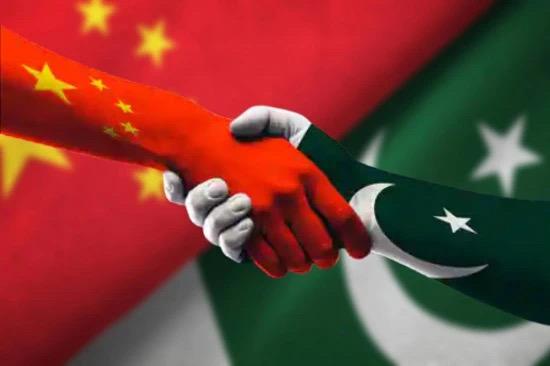
The friendship between Pakistan and China is a remarkable example of a longstanding international relationship built on mutual trust, respect, shared interests and an enduring commitment to cooperation. Over the decades, it has survived changing regional and international circumstances, political transitions and geopolitical challenges. Often described as an iron-clad, time-tested and all-weather strategic cooperative partnership, this relationship has evolved into a comprehensive collaboration encompassing politics, diplomacy, defence, trade, investment, technology, education and cultural exchanges. The recent visit of Liu Haixing, Minister of the International Department of the Communist Party of China (CPC) Central Committee, has provided fresh momentum to this historic partnership and strengthened its political and institutional foundations.
Liu visited Pakistan from November 1 to 3, 2026, at the invitation of Deputy Prime Minister and Foreign Minister Senator Mohammad Ishaq Dar. His first official visit to Pakistan in his present capacity carried considerable political and strategic significance. As head of the CPC's International Department (IDCPC), Liu plays an important role in promoting relations between the Communist Party of China and political parties and institutions worldwide. His visit therefore represented an important opportunity to deepen political understanding, strengthen institutional connections and reinforce the strategic consensus between the two countries.
High-level engagement: A demonstration of mutual trust
The significance of the visit was reflected in Liu's meetings with Pakistan's highest political and military leadership. Prime Minister Muhammad Shehbaz Sharif received the Chinese dignitary and reaffirmed that Pakistan–China relations constitute an iron-clad, time-tested and all-weather strategic cooperative partnership. He emphasised that this friendship rests on mutual trust, mutual respect and deep-rooted bonds between the peoples of both countries.
Their discussions covered trade, investment, infrastructure, connectivity, information technology and agricultural modernisation, alongside regional and international developments. Both sides reaffirmed their commitment to maintaining close coordination at bilateral and multilateral forums.
Liu also held a substantive meeting with Deputy Prime Minister and Foreign Minister Ishaq Dar, focusing on political engagement, cultural cooperation and people-to-people exchanges. Their reaffirmation of the positive momentum in bilateral relations demonstrated the importance both countries attach to sustained diplomatic and institutional communication.
An equally important meeting took place at General Headquarters, Rawalpindi, where Chief of Defence Forces and Chief of Army Staff Field Marshal Syed Asim Munir received the visiting minister. Discussions covered evolving regional and international security dynamics and bilateral relations. Both sides reaffirmed their determination to strengthen the strategic partnership. Liu appreciated Pakistan's contribution to regional peace and stability.
The engagement with political and military leadership demonstrated that Pakistan–China cooperation rests on broad institutional foundations, extending beyond individual governments and diplomatic channels.
Political understanding and governance cooperation
One of the most significant achievements of the visit was the symposium on Xi Jinping Thought on Party Building and the seminar on China–Pakistan governance, co-chaired by Liu Haixing and Ishaq Dar on November 2.
The participation of representatives from Pakistan's major political parties, including Planning Minister Professor Ahsan Iqbal, PPP Secretary General Syed Nayyer Hussain Bokhari, Senators Sherry Rehman and Anusha Rahman Khan, and former Senator Mushahid Hussain Syed, gave the event particular importance. Representatives of the Foreign Office, think tanks and the policy community also attended.
This engagement demonstrated that the relationship is not restricted to government-to-government cooperation. Political parties, academic institutions, researchers and policy organisations have important roles in building mutual understanding and ensuring continuity in bilateral relations. Greater exchange of governance experiences, institutional practices and development strategies can contribute to stronger policymaking and national development in both countries.
Such broad-based political engagement is particularly valuable for Pakistan, where continuity of economic policies and national development priorities remains essential.
CPEC 2.0 and emerging economic opportunities
The visit also reinforced expectations for advancing the next phase of the China–Pakistan Economic Corridor (CPEC). Discussions on CPEC 2.0 and enhanced security cooperation reflect the shared determination to protect existing investments while creating new opportunities for industrial development and economic transformation.
The next phase should focus on industrial cooperation, agricultural modernisation, information technology, mining, renewable energy, employment generation and regional connectivity. Pakistan must move beyond infrastructure development towards productive investment, export-oriented industries, technology transfer and stronger participation by local businesses.
Security cooperation is equally important. Protecting Chinese personnel, infrastructure and investments is a shared responsibility and an essential requirement for sustaining investor confidence. Stronger coordination and effective implementation of security arrangements can help create a more reliable environment for future projects.
Two recent initiatives further complement this positive momentum. The China–Pakistan Information Corridor, launched on October 26, brings together media, businesses, think tanks, culture, tourism and youth exchanges. Similarly, the October 29 agreement to operationalise a Green Channel at the Sost–Khunjerab border will facilitate agricultural and allied trade through improved customs coordination and priority processing of eligible consignments.
Together, these initiatives demonstrate how the strategic relationship can generate practical opportunities for businesses, farmers, young people and wider communities.
An enduring friendship with a forward-looking vision
Liu Haixing's visit has reinforced the political confidence, institutional connectivity and strategic understanding that underpin Pakistan–China relations. Its significance extends beyond the meetings themselves: it has strengthened the foundations for future cooperation and reaffirmed the commitment of both countries to their shared strategic partnership.
The immediate priority must now be implementation. Both governments should establish effective follow-up mechanisms, accelerate priority projects, improve coordination, facilitate private-sector participation and strengthen cooperation among universities, research institutions, media organisations and young professionals.
Pakistan and China have repeatedly demonstrated that their friendship is not dependent on temporary political circumstances or short-term calculations. It is rooted in decades of trust, solidarity and practical cooperation. The relationship is often described as higher than mountains, deeper than oceans and sweeter than honey; its enduring strength is reflected in the consistency of their mutual support.
Liu Haixing's visit has added another important chapter to this remarkable history. By translating political goodwill into economic progress, technological advancement, institutional cooperation and stronger people-to-people connections, the two countries can further cement their iron-clad friendship and build an even more productive partnership for future generations.
The message is clear: Pakistan and China are not merely maintaining a historic friendship; they are working together to shape its next chapter.
(ASIA PACIFIC DAILY)