Author: Prof. Engr. Zamir Ahmed Awan, Sinologist – Diplomat – Advisor - Consultant,Founding Chair, Global Silk Route research Alliance.(E-mail: awanzamir@yahoo.com).
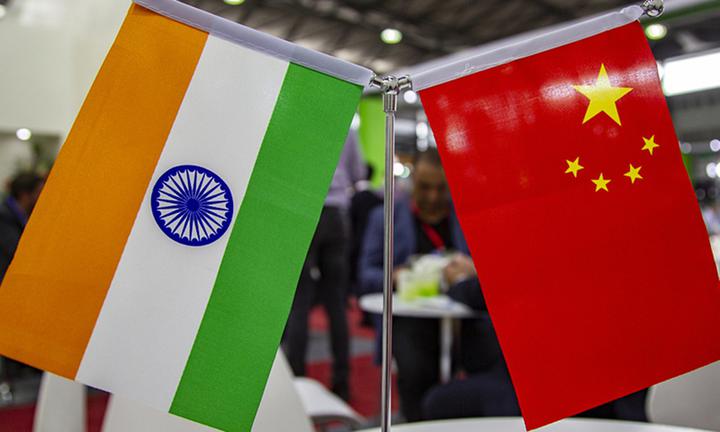
Chinese President Xi Jinping’s visit to India for the 18th BRICS Summit and his meeting with Prime Minister Narendra Modi mark an important diplomatic effort to stabilize China-India relations. Xi’s first visit to India in seven years, accompanied by a large delegation of about 400 officials, carries considerable political and economic significance. Both leaders have emphasized dialogue, mutual respect and the need to prevent differences from becoming disputes. Yet expectations of a fundamental breakthrough should remain cautious.
The central problem is not the absence of dialogue but the depth of strategic divergence. The two countries remain locked in an unresolved boundary dispute along their roughly 3,800-kilometre frontier. The 2020 Galwan clash fundamentally damaged mutual trust, and although the 2024 disengagement agreement reduced military tensions, the boundary question remains unresolved. The 25th round of Special Representatives’ talks in August 2026 again produced commitments to maintain peace and tranquility, but not a final territorial settlement.
India’s strategic relationship with the United States is another major source of Chinese concern. India is a member of the Quad, alongside the United States, Japan and Australia, while AUKUS remains a separate trilateral partnership among Australia, Britain and the United States. India is not an AUKUS member. Nevertheless, India’s growing defence, intelligence, technology and maritime cooperation with Washington and other Indo-Pacific partners has strengthened the strategic environment in which China perceives itself to be contained.
At the same time, India has substantial disagreements with China beyond the border. New Delhi remains opposed to the China-Pakistan Economic Corridor because of its position on Kashmir and objects to aspects of the Belt and Road Initiative. Tibet also remains politically sensitive because the Dalai Lama and the Tibetan exile community are based in India. Competition extends into the Indian Ocean, South Asia, telecommunications, critical technologies, infrastructure, supply chains and influence across developing countries.
Economic relations reveal an equally striking contradiction. China remains indispensable to Indian manufacturing, supplying machinery, electronics, chemicals, solar equipment and other industrial inputs. Yet India continues to regard excessive dependence on Chinese supply chains as a strategic vulnerability. After the 2020 crisis, New Delhi imposed tighter investment screening and restrictions affecting Chinese companies. Some restrictions have recently been eased, particularly in selected manufacturing sectors, demonstrating that economic necessity is pushing the two sides toward pragmatism.
Trade, however, remains deeply imbalanced. India’s official figures show that Chinese imports reached about $131.6 billion in FY2025–26, against exports of roughly $19.5 billion, producing a deficit exceeding $112 billion. This imbalance gives India a powerful reason to demand greater market access while simultaneously making China an important economic partner.
The divergence is also visible within BRICS and the Shanghai Cooperation Organisation. India participates actively in both institutions but does not necessarily share China’s preference for transforming them into instruments for a rapid post-dollar financial order. This should not, however, be described as India simply “protecting American interests.” New Delhi itself advocates greater use of national currencies and has proposed linking BRICS digital-payment systems, while resisting the idea of replacing the dollar with a common BRICS currency. India’s position is better understood as strategic autonomy rather than straightforward alignment with either Beijing or Washington.
This distinction is crucial. India seeks the economic opportunities of BRICS and SCO while retaining substantial strategic and technological links with the West. China, meanwhile, increasingly advocates a more multipolar international order and greater Global South coordination. Their objectives overlap in some areas but diverge sharply in others.
Therefore, the present China-India thaw should be welcomed, but not exaggerated. Xi and Modi have demonstrated that dialogue remains possible; restoring flights, visas, trade and military communication can reduce the danger of confrontation. Yet territorial disputes, strategic competition, economic mistrust, India’s expanding Western partnerships and competing visions of the regional order remain substantial obstacles.
The realistic objective is therefore not immediate strategic convergence. It is managed competition, sustained dialogue and selective cooperation. If both Asian powers can separate bilateral disputes from wider multilateral cooperation, Asia will benefit. A summit can open a door; only sustained political confidence can determine whether either side ultimately walks through it.
(ASIA PACIFIC DAILY)