Author: Prof. Engr. Zamir Ahmed Awan, Sinologist – Diplomat – Advisor - Consultant,Founding Chair, Global Silk Route research Alliance.(E-mail: awanzamir@yahoo.com).
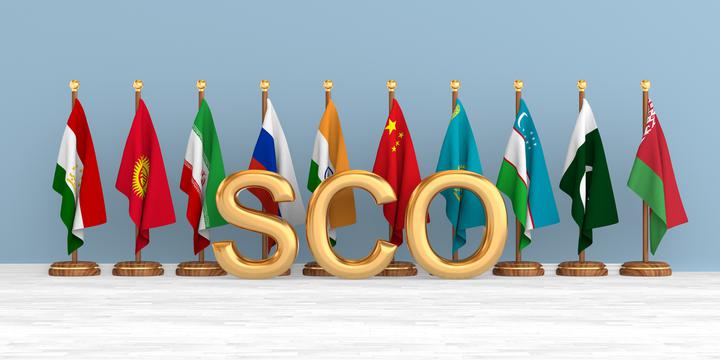
The Shanghai Cooperation Organisation (SCO) has evolved considerably since its establishment in Shanghai on June 15, 2001. What began with six countries—China, Russia, Kazakhstan, Kyrgyzstan, Tajikistan and Uzbekistan—has developed into one of Eurasia’s most significant multilateral organisations. Pakistan joined as a full member in 2017, and Belarus became the tenth member in 2024.
The SCO should not be misunderstood as a military bloc directed against any particular country. Its founding principles emphasize mutual trust, sovereignty, equality, consultation, good-neighbourliness and non-targeting of other states. Its mandate covers both security and economic cooperation: countering terrorism, extremism, separatism, drug trafficking and transnational crime, while promoting trade, investment, energy, transport, technology, education, health and cultural cooperation.
Its expansion demonstrates its growing international relevance. The SCO now has 10 full members, alongside two observer states—Afghanistan and Mongolia—and 15 dialogue partners, including Saudi Arabia, Türkiye, Egypt, Qatar, the UAE, Nepal, Sri Lanka, Azerbaijan and Laos. In 2025, the organisation decided to replace the observer and dialogue-partner categories with a broader “SCO Partner” status, although the existing arrangements remain during the legal transition.
The appetite for wider engagement is considerable. The SCO secretary-general said in June 2026 that roughly 20 applications had been received from countries seeking to join or participate in the organisation in some capacity. Expansion, however, is not automatic; future admissions require consensus among existing members.
The numbers explain the attraction. The SCO member states represent approximately 40 percent of the world's population and around one-quarter of global GDP, according to the SCO Secretariat. Their share of global trade has risen dramatically—from 5.4 percent in 2001 to about 17.5 percent in 2020; more recent SCO statements put the organisation's share at more than 15 percent.
Its resource base is equally formidable. The SCO space contains some of the world's largest reserves and producers of oil and natural gas, coal, uranium, rare earths and other strategic minerals, alongside enormous agricultural and water resources. Russia, Iran and Kazakhstan are major energy producers; China dominates critical-mineral processing and rare-earth supply chains; and Central Asian members possess substantial hydrocarbons, uranium and mineral resources. There is no single authoritative figure for the “number” of natural resources held by the SCO, but its combined resource endowment is clearly one of its greatest economic assets.
For Pakistan, this is an opportunity rather than merely a diplomatic label.
Pakistan occupies a strategically important position connecting South Asia with Central Asia, China, the Middle East and the wider Eurasian market. Through the China-Pakistan Economic Corridor, Gwadar, road and rail networks, and potential links with Central Asian economies, Pakistan can contribute to the SCO's central objective of improving regional connectivity.
Pakistan has already demonstrated that it understands the organisation's responsibilities. It hosted the SCO Council of Heads of Government in Islamabad in 2024 and currently chairs the SCO Regional Anti-Terrorist Structure. It also holds the permanent chairmanship of the SCO Special Working Group on Poverty Alleviation—an initiative originally proposed by Pakistan.
These are not symbolic contributions. Pakistan's experience in counterterrorism, its geographical position, its large market, agricultural potential, young population and access to the Arabian Sea give it a meaningful role in advancing the SCO's economic and security agenda. A peaceful and stable Pakistan is in the interest of the entire region.
The timing is particularly important. Following the August 31–September 1, 2026 SCO summit in Bishkek, Pakistan is scheduled to assume the organisation's rotating chairmanship for 2026–27. The defining event will be the 2027 SCO Council of Heads of State Summit in Islamabad.
Pakistan should use this opportunity ambitiously but pragmatically. Its priorities should include regional transport corridors, trade facilitation, digital connectivity, food and energy security, counterterrorism cooperation, tourism, public health and poverty reduction. Islamabad should also encourage greater intra-SCO trade and investment rather than allowing the organisation to remain primarily a political and security forum.
The SCO represents an increasingly important pillar of the Global South. China, with its enormous economic, technological and infrastructural capabilities, is a major source of strength within this wider cooperation framework. Pakistan is well placed to work with China and other SCO members without sacrificing its independent foreign policy.
The coming year should therefore be viewed not simply as Pakistan's turn to chair the SCO, but as a test of what Pakistan can contribute to Eurasian cooperation. If Islamabad converts its geography into connectivity, its market into trade, and its diplomatic credibility into practical initiatives, the 2027 summit could become a milestone—not only for the SCO, but for Pakistan's role in shaping a more connected, peaceful and prosperous Eurasia.
(ASIA PACIFIC DAILY)