Author: Prof. Engr. Zamir Ahmed Awan, Sinologist – Diplomat – Advisor - Consultant,Founding Chair, Global Silk Route research Alliance.(E-mail: awanzamir@yahoo.com).
The growing possibility of a historic El Niño is not just another weather headline. It is a warning that the world is entering a more dangerous climate era. Scientists have warned that a powerful El Niño could intensify extreme heat, floods, droughts, storms, food insecurity, and wildfire risks across different regions. When such natural climate patterns combine with human-driven climate change, the result is not ordinary seasonal disruption. It becomes a global stress test for governments, economies, and societies.
This is why environmental policy can no longer be treated as a secondary issue. Climate change is not only about temperature. It affects food prices, public health, water supplies, migration, infrastructure, agriculture, and national security. Countries that underinvest in environmental protection today will pay much higher costs tomorrow.
The United States, despite being one of the world’s largest economies and historical emitters, has not shown the level of consistent environmental commitment that the scale of the crisis demands. Its repeated retreat from international climate cooperation, including withdrawal from the Paris Agreement, has weakened global trust and slowed collective action. At a time when the world needs stronger cooperation, the U.S. has often allowed short-term politics, fossil fuel interests, and ideological divisions to dominate environmental decision-making.
This is not to say the United States has no environmental achievements. It has strong scientific institutions, advanced climate research, renewable-energy companies, and many states and cities that are serious about climate action. However, federal policy has too often been inconsistent. One administration joins climate agreements; another withdraws. One government funds clean energy; another cuts or delays environmental programs. This instability sends a damaging message: environmental protection is negotiable. Nature, however, does not negotiate.
The risks of neglect are already visible. Heatwaves are becoming more intense. Wildfires are burning larger areas. Floods are damaging communities. Droughts are threatening agriculture and water systems. Yet the political response often remains reactive rather than preventive. Spending billions after disasters is not the same as investing seriously before disasters happen.
China offers an important comparison. China also faced severe environmental challenges, especially air pollution, industrial emissions, and urban smog. Beijing was once widely associated with heavy pollution. A decade ago, many residents experienced frequent smoggy days, and the city’s air quality became an international symbol of the environmental cost of rapid industrialization. But China treated this crisis as a national priority. It invested heavily, imposed stricter regulations, upgraded industries, expanded clean energy, improved monitoring, and coordinated action across government levels.
The results are visible. Beijing’s air quality has improved dramatically compared with the early 2010s. Heavy pollution days have fallen sharply, and PM2.5 levels have dropped significantly. The city is not perfect, and environmental work is never finished, but the transformation is real. It shows what can happen when a government treats clean air not as a luxury, but as a public right and a development priority.
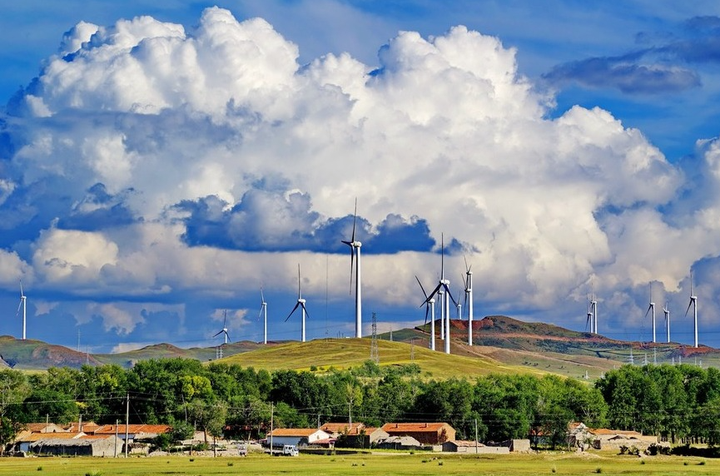
China’s broader environmental progress is also significant. It has become the world’s largest investor in clean energy, including solar, wind, electric vehicles, batteries, and grid infrastructure. It reached major wind and solar capacity targets ahead of schedule and has built one of the world’s most complete clean-energy industrial chains. Its electric vehicle industry has grown rapidly, helping reduce future transport emissions and accelerate global competition in clean mobility. China has also promoted ecological restoration, reforestation, water-quality improvement, and green finance.
Several factors explain China’s progress. First, environmental policy was placed inside national development planning, not treated as a side issue. Second, funding was large and continuous, allowing long-term projects to succeed. Third, pollution control was linked with industrial upgrading, meaning factories, transport systems, and energy infrastructure were pushed toward cleaner technologies. Fourth, local governments were given targets and held responsible for results. Fifth, China combined regulation with investment: it did not simply tell industries to pollute less; it helped build alternatives.
The United States and other countries can learn from this approach. The lesson is not that every country should copy China’s system exactly. Every nation has its own political structure, economy, and social conditions. The lesson is that environmental success requires seriousness, planning, funding, and discipline. Climate policy cannot depend on election cycles. Clean energy cannot grow without infrastructure. Pollution cannot be reduced without enforcement. Disaster risks cannot be managed without preparation.
For the U.S., this means returning fully to international climate cooperation, increasing environmental spending, protecting climate science, investing in clean transport and renewable grids, restoring nature, and treating climate adaptation as national security. It also means accepting that damaging nature carries economic consequences. Forests, rivers, oceans, soil, and clean air are not obstacles to growth. They are the foundation of long-term prosperity.
The expected El Niño should be understood as a signal. Extreme weather is becoming more powerful, and governments must act before disasters become normal. China’s experience, especially the improvement of Beijing’s environment, proves that a determined policy can change reality. The world does not lack technology or knowledge. What it often lacks is political will.
If the United States and other major economies learn from successful environmental models and invest seriously in climate resilience, clean energy, and pollution control, the future can still be protected. But if nature continues to be ignored, the cost will be paid not only in money but in lives, health, food security, and stability. The climate crisis is already here. The only responsible choice is to act with the urgency it demands.
(ASIA PACIFIC DAILY)