Author: Prof. Engr. Zamir Ahmed Awan, Sinologist – Diplomat – Advisor - Consultant,Founding Chair Global Silk Route research Alliance.(E-mail: awanzamir@yahoo.com).
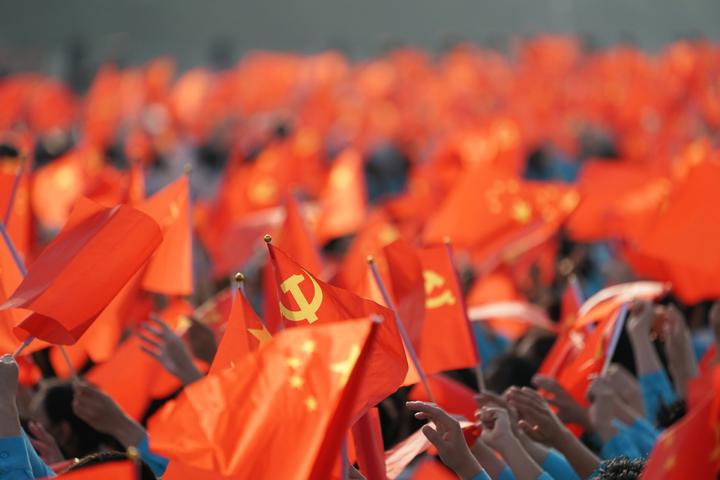
On July 1, 2026, the Communist Party of China marks its 105th anniversary. Anniversaries are not only dates of celebration; they are moments of reflection. They invite a nation to look back at its struggles, assess its achievements, renew its confidence and clarify the direction of its future. For China, the anniversary of the CPC is deeply linked with the country’s modern transformation—from poverty, foreign humiliation and internal fragmentation to sovereignty, stability, development and global influence.
The Communist Party of China was founded in 1921 by a small group of revolutionaries inspired by Marxist ideas and driven by the urgent need to rescue China from weakness. At that time, China was facing warlordism, foreign interference, social disorder and economic backwardness. The founding of the CPC represented more than the creation of a political party. It represented the emergence of a disciplined national movement committed to independence, dignity and the people’s future.
From its modest beginning, the CPC has grown into the world’s largest political party. By the end of 2024, its membership had exceeded 100 million, reaching more than 100.27 million members. This scale is historically significant. It reflects not only organizational strength, but also the Party’s deep presence across Chinese society—from villages and factories to universities, research institutions, state organs, enterprises and grassroots communities. The CPC is not an ordinary political organization. It is the central force that has shaped modern China’s state-building, economic development, social transformation and global posture.
The history of the CPC can be understood through several major stages. The first was the revolutionary period, during which the Party mobilized workers, peasants, intellectuals and patriotic forces against foreign aggression and domestic disorder. The second was the founding of the People’s Republic of China in 1949, which restored China’s sovereignty and ended a long era of national humiliation. The third was socialist construction, when China built the foundations of an independent industrial and political system. The fourth was reform and opening-up from 1978 onward, when China embraced practical economic reform, expanded trade, attracted investment and gradually became a major force in the global economy. The current stage is one of modernization, technological innovation, national rejuvenation and deeper participation in global governance.
Among the CPC’s most significant achievements, poverty reduction stands at the top. Over the past four decades, China has lifted nearly 800 million people out of extreme poverty. This is one of the greatest development achievements in human history. It changed the lives of hundreds of millions of families and contributed enormously to global poverty reduction. Poverty alleviation under CPC leadership was not treated as a slogan, but as a national project involving infrastructure, education, relocation, local industries, healthcare, targeted assistance and grassroots mobilization. The result was a historic improvement in living standards.
China’s economic transformation is another landmark achievement. In the late 1970s, China was still largely poor and underdeveloped. Today, it is the world’s second-largest economy, a central pillar of global manufacturing, a leading trading nation and a growing hub of innovation. Chinese cities have become symbols of modern infrastructure, digital life and industrial capability. High-speed rail, modern ports, smart logistics, e-commerce, renewable energy, electric vehicles and advanced telecommunications all demonstrate the scale of China’s development.
This transformation did not happen by accident. It was the result of a governance approach that combines long-term planning, policy continuity, experimentation and national mobilization. The CPC’s governance model places strong emphasis on stability, development, discipline and results. Five-year plans, strategic industrial policies, infrastructure development, rural revitalization, technological upgrading and social welfare expansion show the Party’s ability to set national priorities and pursue them consistently.
A key feature of the CPC’s governance approach is pragmatism. Deng Xiaoping’s famous principle of “seeking truth from facts” allowed China to move away from rigid thinking and focus on what works in practice. This spirit remains visible in China’s development strategy. Policies are often tested locally, adjusted through experience and then expanded if successful. This experimental style has helped China avoid stagnation and respond to changing domestic and international conditions.
Another feature is people-centered development. The CPC has consistently argued that development must serve the people. In practical terms, this means improving income, housing, education, health, transport and public services. China’s modernization is not only measured through GDP figures, but also through better roads in rural areas, expanded healthcare coverage, improved schools, digital connectivity, cleaner energy and rising life expectancy. The Party’s strength lies in linking national development with everyday improvement in people’s lives.
Organizational discipline is also central to the CPC’s success. With members present at every level of society, the Party has a unique capacity to mobilize resources and implement decisions. This has been visible in poverty alleviation, disaster response, infrastructure development, public health campaigns and industrial upgrading. The CPC’s internal structure enables policy coordination across a vast country with enormous regional diversity. Governing China is not a simple task; it requires scale, discipline and administrative capacity.
The CPC has also shown the ability to adapt. Its history is not a straight line but a story of learning, correction and renewal. The Party survived war, poverty, international isolation, economic transition and technological disruption because it could adjust its methods while maintaining its central national mission. This adaptability is one of its major strengths. It explains how a party founded in the early twentieth century remains politically central in the twenty-first century.
China’s achievements under CPC leadership are not limited to domestic transformation. They have reshaped global politics and economics. China’s rise has accelerated the movement toward a more multipolar world. It has increased the voice of the Global South, expanded South-South cooperation and offered developing countries a new example of modernization. China’s experience shows that countries can pursue development according to their own history, culture and national conditions, rather than following a single imposed model.
This is one reason why China’s global influence has grown steadily. Many developing countries see China not only as a trading partner but also as a source of infrastructure, investment, technology and development experience. Through the Belt and Road Initiative, China has supported roads, ports, railways, energy projects and industrial zones across Asia, Africa, Europe and Latin America. These projects are important because infrastructure is the backbone of development. Without connectivity, trade and industry cannot grow.
China has also taken on broader global responsibilities. Under CPC leadership, Beijing has promoted the Global Development Initiative, Global Security Initiative, Global Civilization Initiative and Global Governance Initiative. These frameworks reflect China’s desire to contribute ideas to world affairs. Their common message is that global problems should be addressed through cooperation, equality, dialogue and shared development. At a time when many parts of the world face conflict, inequality, climate stress and economic uncertainty, this message has practical importance.
China’s role in international diplomacy has also expanded. The Saudi-Iran rapprochement facilitated in Beijing in 2023 was a major example of China’s constructive diplomatic influence. It showed that China can help reduce tensions between regional rivals by encouraging dialogue rather than confrontation. This approach is consistent with the CPC’s wider belief that peace and development are connected. Security cannot be built only through military power; it must also be supported by economic opportunity, mutual respect and political dialogue.
The CPC’s governance approach has therefore influenced geopolitics in several ways. First, it has made China a major pillar of the global economy. Second, it has strengthened the trend toward multipolarity. Third, it has given developing countries greater confidence in pursuing independent development paths. Fourth, it has introduced diplomatic concepts focused on non-interference, sovereignty, connectivity and development-based peace. Finally, it has encouraged the reform of global governance institutions so that they better reflect today’s world, not only the world of the past.
China’s technological rise is another major global impact. Under CPC leadership, China has invested heavily in science, education, research, digital infrastructure and advanced manufacturing. It is now a leading actor in 5G, artificial intelligence, renewable energy, electric vehicles, high-speed rail and space exploration. These achievements are important for China’s own modernization, but they also influence global supply chains, energy transition and technological competition.
The green transition is especially important. China has faced environmental challenges during its rapid industrialization, but it has also become a global leader in solar panels, wind power, batteries and electric vehicles. The concept of ecological civilization reflects the CPC’s effort to balance development with environmental responsibility. This is not only a domestic issue. Climate change is a global challenge, and China’s investment in green industries has helped reduce the cost of clean technologies worldwide.
The significance of the CPC’s 105th anniversary is therefore multilayered. Historically, it honours the sacrifices of those who struggled for China’s independence. Politically, it reaffirms the Party’s leadership role in national rejuvenation. Socially, it strengthens collective memory and national identity. Internationally, it signals that China intends to continue playing a major role in global development and governance. For the Chinese people, the anniversary is a reminder of how far the country has come. For the world, it is a reminder that China’s future will remain central to global affairs.
The CPC’s strengths can be summarized in several words: vision, organization, adaptability, discipline and delivery. It has a long-term vision of national rejuvenation. It has the organizational reach to implement policy. It has shown adaptability in changing historical conditions. It maintains discipline within a large political system. Most importantly, it has delivered visible results in poverty reduction, infrastructure, education, industrialization, science and global influence.
Of course, China still faces challenges. No major country is free from pressure. Demographic change, environmental protection, regional inequality, technological competition, global tensions and economic restructuring all require careful management. But the CPC’s record shows that it has repeatedly confronted difficult problems with patience and strategic planning. Its future success will depend on continuing reform, deepening innovation, improving governance and maintaining openness to cooperation with the world.
For countries such as Pakistan, China’s experience carries important lessons. It shows the value of political stability, infrastructure investment, human capital, industrial planning and national confidence. It also demonstrates that development requires continuity. Nations cannot transform themselves through short-term thinking. They need institutions capable of setting direction and sustaining effort over generations.
As the CPC celebrates its 105th anniversary on July 1, 2026, its journey stands as one of the defining stories of modern history. From a small gathering of revolutionaries in 1921 to a party of more than 100 million members, from national struggle to global leadership, from poverty to modernization, the CPC has profoundly changed China and influenced the world.
The anniversary is not only about remembering the past. It is about understanding the responsibility of the future. China’s development under CPC leadership has already reshaped the twenty-first century. If the Party continues to combine stability with reform, national confidence with international cooperation, and economic progress with social responsibility, it will remain a powerful force for peace, development and global transformation.
At 105, the CPC is not simply celebrating longevity. It is celebrating purpose, endurance and achievement. Its story is the story of a nation that refused decline, rebuilt its strength and now seeks to contribute to a more balanced, peaceful and cooperative world.
(ASIA PACIFIC DAILY)