Author: Prof. Engr. Zamir Ahmed Awan, Sinologist – Diplomat – Advisor - Consultant,Founding Chair Global Silk Route research Alliance.(E-mail: awanzamir@yahoo.com).
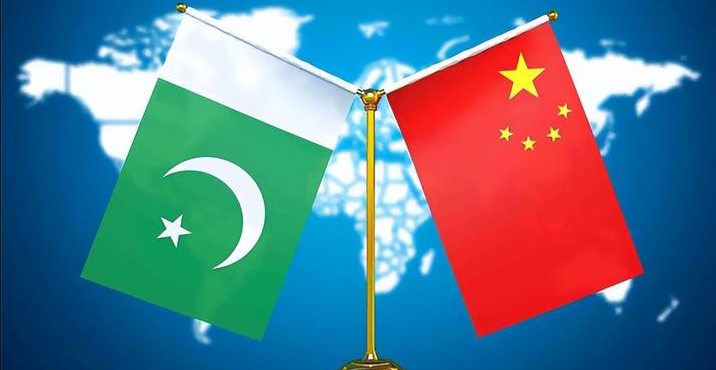
The year 2026 marks the 75th anniversary of the establishment of diplomatic relations between the People’s Republic of China and the Islamic Republic of Pakistan—a milestone that invites both celebration and reflection. Few bilateral relationships in the modern world have demonstrated such consistency, mutual trust, and strategic depth. Fewer still have weathered geopolitical shifts, regional turbulence, and global transformations with the same steadiness and sincerity.
China and Pakistan often describe their relationship as “higher than the mountains, deeper than the oceans, and sweeter than honey.” While poetic, this sentiment is not mere rhetoric. It reflects a lived reality shaped by decades of cooperation, shared aspirations, and an unwavering commitment to each other’s core interests. As the two nations commemorate 75 years of diplomatic ties, the story of their partnership stands as a testament to what long-term vision, mutual respect, and people-centered diplomacy can achieve.
A Chronology Rooted in Mutual Respect
1950s: Foundations of Friendship
The seeds of China–Pakistan friendship were sown early. Pakistan was among the first countries to recognize the People’s Republic of China in 1950. Formal diplomatic relations were established on May 21, 1951, marking the beginning of a partnership that would grow steadily in the decades to come.
During the 1950s, both nations were navigating complex regional dynamics. Yet, despite global polarization, Pakistan consistently advocated for China’s rightful representation in the United Nations. This early political goodwill laid the foundation for a relationship built on trust.
1960s: Strategic Convergence
The 1960s witnessed a deepening of ties as both countries found common ground in regional security concerns. The 1963 Sino‑Pakistan Boundary Agreement, which peacefully demarcated their border, became a model of diplomatic negotiation. It also symbolized the maturity of their relationship at a time when Asia was undergoing profound geopolitical shifts.
Pakistan’s support for China during this period—particularly in facilitating China’s outreach to the West—further cemented mutual confidence. The two countries began to see each other not just as neighbors, but as strategic partners.
1970s: A Bridge Between East and West
The 1970s marked a historic chapter. Pakistan played a pivotal role in enabling the rapprochement between China and the United States, hosting the secret visit of Henry Kissinger in 1971. This diplomatic breakthrough reshaped global politics and demonstrated Pakistan’s unique position as a trusted friend of China.
In 1976, the two countries signed agreements on economic and technical cooperation, laying the groundwork for future development partnerships. Cultural exchanges also expanded, strengthening people-to-people ties.
1980s–1990s: Expanding Cooperation
The following decades saw the relationship broaden into defense, technology, and economic cooperation. China assisted Pakistan in major infrastructure projects, including the construction of the Karakoram Highway, often called the “Eighth Wonder of the World.” This engineering marvel not only connected the two nations physically but also symbolized their shared determination to overcome challenges—geographical and otherwise.
Defense collaboration deepened significantly, with joint ventures in aircraft development, naval cooperation, and military training. These initiatives were grounded in a shared commitment to regional stability and sovereignty.
2000s: Strategic Partnership for the New Century
The dawn of the 21st century brought new opportunities. In 2005, China and Pakistan elevated their relationship to a “strategic partnership.” This period saw rapid growth in trade, investment, and technological collaboration.
China became Pakistan’s largest supplier of defense equipment and a major investor in energy, telecommunications, and infrastructure. The two countries also strengthened cooperation in counterterrorism and regional security, recognizing the interconnected nature of emerging global threats.
2013–Present: The CPEC Era and a Shared Future
The launch of the China–Pakistan Economic Corridor (CPEC) in 2013 marked a transformative moment. As a flagship project of the Belt and Road Initiative (BRI), CPEC represents one of the most ambitious development partnerships in modern history.
Over the past decade, CPEC has delivered:
More than 8,000 MW of electricity, helping Pakistan reduce chronic energy shortages
Highways, motorways, and port infrastructure, including the revitalization of Gwadar Port
Industrial zones and special economic zones, attracting investment and creating jobs
Fiber-optic connectivity, enhancing Pakistan’s digital infrastructure
CPEC is not merely an economic project; it is a vision for shared prosperity, regional connectivity, and long-term stability.
Achievements That Define the Partnership
1. Economic Transformation Through CPEC
CPEC has become the backbone of Pakistan’s development strategy. It has modernized the country’s energy landscape, improved logistics, and laid the foundation for industrial growth. Chinese companies have invested billions of dollars, created employment opportunities and transferred technology.
For China, CPEC provides a secure and efficient trade route, enhances regional connectivity, and strengthens its role as a partner in global development.
2. Defense and Security Cooperation
China and Pakistan have built one of the most robust defense partnerships in Asia. Joint projects such as the JF‑17 Thunder fighter aircraft, naval frigates, and advanced missile systems reflect a high level of technological collaboration.
This cooperation is not directed against any third party; rather, it is rooted in a shared commitment to peace, stability, and the protection of national sovereignty.
3. Humanitarian and Crisis Support
China has consistently stood by Pakistan during times of crisis. Whether during natural disasters, economic challenges, or global pandemics, China’s support has been swift and substantial.
During the COVID‑19 pandemic, China was the first country to send vaccines, medical teams, and supplies to Pakistan. This humanitarian assistance reinforced the depth of the relationship at a time when global solidarity was in short supply.
4. Cultural and Educational Exchanges
People-to-people ties form the heart of China–Pakistan friendship. Thousands of Pakistani students study in Chinese universities, many on scholarships. Cultural festivals, media exchanges, and tourism initiatives have deepened mutual understanding.
Confucius Institutes in Pakistan and Urdu language programs in China have further strengthened cultural connectivity, ensuring that the next generation inherits the spirit of friendship.
5. Cooperation in Science, Technology, and Space
In recent years, collaboration has expanded into high-tech domains. China has assisted Pakistan in launching satellites, developing digital infrastructure, and enhancing agricultural technology.
Joint research in renewable energy, climate resilience, and artificial intelligence reflects a forward-looking partnership aligned with global innovation trends.
Why the China–Pakistan Relationship Endures
Mutual Trust
Trust is the cornerstone of this relationship. Both countries respect each other’s sovereignty, internal affairs, and national priorities. This mutual respect has allowed the partnership to flourish without the frictions that often accompany international alliances.
Complementary Strengths
China’s economic and technological capabilities complement Pakistan’s strategic location, demographic potential, and role as a bridge between South Asia, Central Asia, and the Middle East.
Shared Vision for Regional Stability
Both nations advocate for peaceful coexistence, multilateralism, and development-driven diplomacy. Their cooperation contributes to regional stability, especially in the context of evolving global power dynamics.
People-Centered Diplomacy
The warmth between the peoples of China and Pakistan is genuine. Public opinion in both countries consistently reflects strong mutual goodwill—a rare phenomenon in international relations.
Looking Ahead: A Partnership for the Next 75 Years
As China and Pakistan enter the next phase of their diplomatic journey, several areas hold immense promise:
Green development through renewable energy projects and climate adaptation
Digital cooperation in e-commerce, fintech, and cybersecurity
Agricultural modernization to enhance food security
Cultural diplomacy to deepen societal bonds
Regional connectivity linking CPEC with Central Asia, the Middle East, and beyond
The future of China–Pakistan relations will be shaped not only by governments but also by entrepreneurs, scholars, artists, and young people who carry forward the legacy of friendship.
A Model of Enduring Partnership
Seventy-five years after establishing diplomatic relations, China and Pakistan stand as an example of what steadfast friendship can achieve. Their partnership has grown from political goodwill to strategic cooperation, from infrastructure development to cultural exchange, from crisis support to shared aspirations for a better future.
In an era marked by uncertainty, the China–Pakistan relationship offers a rare story of stability, trust, and mutual benefit. It is a partnership not bound by convenience or circumstance, but by a shared belief in progress, peace, and the power of cooperation.
As both nations celebrate this historic anniversary, they do so with confidence—not only in the achievements of the past, but in the limitless possibilities of the future.
(ASIA PACIFIC DAILY)