Author: Prof. Engr. Zamir Ahmed Awan, Founding Chair,Global Silk Route Research Alliance (GSRRA),Sinologist – Diplomat – Analyst - Advisor,(E-mail: awanzamir@yahoo.com).
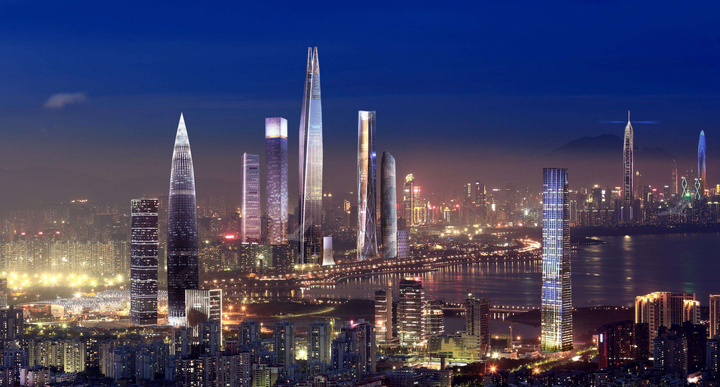
In an era when regions compete not only through resources but through vision, innovation and connectivity, the Guangdong-Hong Kong-Macao Greater Bay Area (GBA) stands out as one of the most compelling development stories of the 21st century. More than a geographical cluster, the GBA has evolved into a dynamic symbol of Chinese modernization, regional integration and global openness. It is increasingly seen not only as an engine of China’s high-quality development, but also as a model with global relevance.
For foreign experts, scholars and think tank representatives invited recently by the International Department of the Communist Party of China (IDCPC) to attend a seminar and field visits in the Greater Bay Area, this was not merely an academic engagement. It was an eye-opening journey into a region where ambitious planning has been translated into visible achievements. Participants widely appreciated IDCPC’s thoughtful hospitality, excellent arrangements and the intellectual richness of the seminar, which offered a rare opportunity to witness firsthand the scale, speed and sophistication of developments transforming the region.
The experience left a strong impression: the Greater Bay Area is not only a Chinese success story, but a window into the future.
From Historical Foundations to National Strategy
The GBA did not emerge overnight. Its roots lie in decades of reform and opening-up. Guangdong was among the earliest frontiers of China’s reform era in the late 1970s and 1980s. Shenzhen, once a fishing town, rose as a symbol of transformation through the Special Economic Zone experiment. Guangzhou maintained its role as a trading hub, while Hong Kong and Macao contributed unique strengths as global financial, legal, logistics and cultural bridges.
The concept of integrating these strengths gradually matured into a national strategy. A major milestone came in 2019 when the Outline Development Plan for the Guangdong-Hong Kong-Macao Greater Bay Area was officially launched, setting a long-term vision through 2035.
Today, the GBA encompasses Hong Kong, Macao and nine Guangdong cities—Guangzhou, Shenzhen, Zhuhai, Foshan, Dongguan, Huizhou, Zhongshan, Jiangmen and Zhaoqing. Together they form one of the world’s most vibrant bay economies, often compared with the San Francisco Bay Area, New York Metropolitan Area and Tokyo Bay.
But comparisons only go so far. The GBA has charted its own path—one rooted in Chinese characteristics, guided by innovation, inclusiveness and coordinated development.
Infrastructure as the Architecture of Integration
One of the most visible achievements of the GBA is infrastructure connectivity.
The region demonstrates how physical connectivity can generate economic integration and social cohesion. Landmark projects such as the Hong Kong-Zhuhai-Macao Bridge have become symbols of engineering excellence and practical regional integration. High-speed rail networks, modern ports, advanced airports and smart logistics systems are reducing distances and creating a highly interconnected urban cluster.
Visitors to the seminar were particularly impressed by how infrastructure in the GBA is not viewed merely as construction, but as an ecosystem for productivity, mobility and innovation.
From the Qianhai cooperation zone to the Hetao Shenzhen-Hong Kong innovation zone, from advanced transport corridors to smart urban systems, the region offers practical examples of how infrastructure can support long-term competitiveness.
This is connectivity with purpose.
Innovation at the Heart of Development
Perhaps the GBA’s most remarkable feature is its rise as a global innovation powerhouse.
Shenzhen has become synonymous with technological dynamism. Guangzhou continues expanding in advanced manufacturing and research. Hong Kong contributes world-class universities, finance and international services. Macao is diversifying through technology, tourism and cooperation platforms.
Together, they form a highly complementary innovation ecosystem.
Artificial intelligence, robotics, biotechnology, digital finance, green technologies and smart manufacturing are not abstract ambitions in the GBA—they are realities shaping industries and livelihoods.
Seminar participants repeatedly noted that what distinguishes the region is not merely innovation output, but innovation integration: research, finance, talent, supply chains and policy support working together.
This reflects a broader strength of China’s development model—the ability to combine strategic planning with practical implementation.
“One Country, Two Systems” in Practice
Another unique strength of the Greater Bay Area lies in its institutional innovation.
The GBA demonstrates how “one country, two systems” can generate synergy through diversity. Different legal systems, financial arrangements and governance traditions are not treated as barriers but as assets.
Cross-border financial connectivity, professional exchanges, legal cooperation, talent mobility and youth programs continue expanding.
This institutional creativity makes the GBA more than an economic zone; it is also a platform for experimentation in governance, openness and cooperation.
For many foreign participants, this was among the seminar’s most striking lessons—that development can be driven not only by capital and technology, but also by institutional imagination.
Green and People-Centered Development
A particularly important dimension often overlooked in outside narratives is the GBA’s emphasis on quality-of-life development.
This is not growth for growth’s sake.
Ecological protection, green urban planning, smart public services and sustainable development are increasingly central. The region is pursuing innovation alongside environmental stewardship, economic dynamism alongside livability.
Participants observed that many cities in the GBA reflect a people-centered approach: clean urban spaces, efficient public services, digital convenience, strong transport and growing cultural vitality.
This combination of prosperity and quality living is an important marker of mature development.
A Gateway Linking China and the World
The Greater Bay Area is also emerging as a major platform linking domestic development with global opportunity.
Its significance extends far beyond southern China.
As a key node in the Belt and Road Initiative, the GBA serves as a bridge for trade, finance, innovation and people-to-people exchanges. Its ports connect global supply chains. Its innovation networks attract global collaboration. Its financial systems support international investment.
Foreign experts at the seminar saw clearly that the region is not inward-looking. It is outward-oriented and increasingly global.
For developing countries, the GBA offers lessons in industrial upgrading, innovation ecosystems and regional cooperation.
For international investors, it offers opportunities.
For scholars, it offers a living laboratory.
For the world, it offers partnership.
IDCPC Seminar: Dialogue that Deepened Understanding
The seminar organized by IDCPC deserves particular recognition.
At a time when understanding China often suffers from distance, stereotypes or selective narratives, such exchanges play an important role.
Participants consistently praised the professionalism, warmth and excellent arrangements of the organizers. More importantly, they valued the substance.
The seminar was informative not only because of presentations and discussions, but because it connected policy concepts with real-world observation.
Seeing the GBA firsthand transformed understanding.
Many participants described the experience as inspiring. Others called it an eye opener. There was broad admiration for the scale of China’s achievements and the strategic vision behind them.
This kind of engagement matters.
It builds understanding through dialogue rather than assumption.
It creates trust through exposure rather than abstraction.
And it reinforces the importance of international scholarly exchanges in a changing world.
Future Prospects: Even Brighter Horizons
If current achievements are impressive, future prospects may be even more significant.
The Greater Bay Area is entering a new stage—moving from rapid growth toward deeper quality-driven development.
Advanced manufacturing, digital economy, green transition, financial integration, scientific research and global cooperation are likely to define its next chapter.
Its contribution to China’s modernization will continue expanding.
Its contribution to global innovation could be profound.
Its role as a model of regional integration may grow even more relevant at a time when the world searches for new pathways of development.
The future of the Greater Bay Area is bright because its foundations are strong: visionary planning, institutional support, talent concentration, technological capability and openness to the world.
That optimism was strongly shared by foreign delegates at the seminar.
Many left convinced that the GBA is not approaching its peak—it is still rising.
A Story the World Should Watch Closely
There are places where development is discussed.
And there are places where development is visibly happening.
The Greater Bay Area belongs to the latter.
It tells a story of what long-term vision, reform, innovation and cooperation can achieve. It reflects confidence, pragmatism and ambition. It embodies not only China’s economic vitality but also the broader aspirations of Chinese modernization.
For those who visited through the IDCPC seminar, the message was clear: the Greater Bay Area is one of the world’s most significant development experiments—and one of its most successful.
Its rise is contributing to China.
Its openness is benefiting the world.
And its future promises even greater possibilities.
In a century increasingly shaped by connectivity and innovation, the Greater Bay Area is not simply keeping pace with the future. It is helping define it.
(ASIA PACIFIC DAILY)