
Every weekend, Asia Pacific Daily will provide you with a run-down of the latest hot news.
This week, the following hot news you should know:
1.Turkish president stresses Gulf countries' right of unrestricted access to high seas
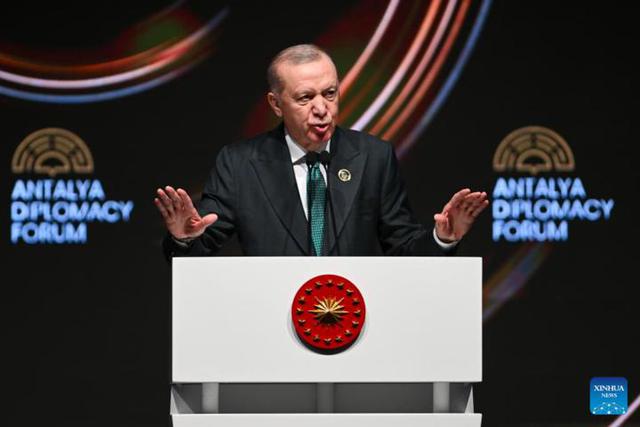
Turkish President Recep Tayyip Erdogan said Friday that Gulf countries' right of access to the high seas must not be restricted, stressing the need to ensure freedom of navigation based on established rules and keep the Strait of Hormuz open to commercial vessels.
Addressing the opening session of the Antalya Diplomacy Forum in Antalya, Erdogan also called for making the most of the opportunity created by the ceasefire to establish lasting peace.
The 5th edition of the Antalya Diplomacy Forum, hosted by the Turkish Foreign Ministry, runs from April 17 to 19, with the theme "Mapping Tomorrow, Managing Uncertainties."
The event brings together leaders, policymakers, diplomats, academics, business experts, media, and civil society representatives to explore ways to best manage uncertainties and address pressing issues while preparing for future challenges.
Iran tightened control over the Strait of Hormuz after the United States and Israel launched joint attacks on the country on Feb. 28. The United States also imposed a naval blockade on the strait following its failed negotiations with Iran in Islamabad, Pakistan.
The peace talks were held Saturday and early Sunday, following a two-week ceasefire between Iran, the United States and Israel that took effect on April 8. A second round of talks is likely to take place on Sunday in Islamabad, media reports showed.
Earlier on Friday, both Washington and Tehran confirmed that the Strait of Hormuz has been completely open for all commercial vessels for the remaining period of the ceasefire. However, U.S. President Donald Trump said the U.S. naval blockade against Iran will "remain in full force." In response, Iran reportedly warned of closing the waterway again if the U.S. blockade continues.
2.About 36,000 Japanese rally against Tokyo's remilitarization push
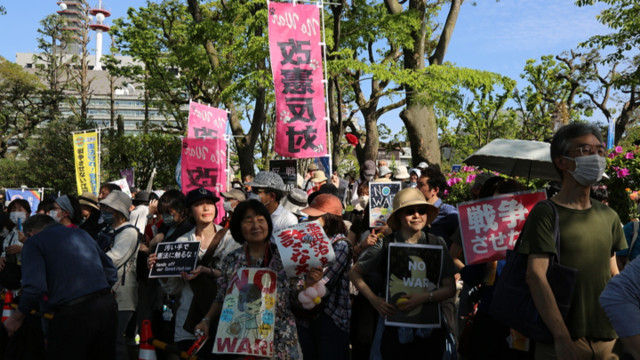
About 36,000 people gathered in Japanese capital Tokyo on Sunday to protest against the government's push to revise the country's pacifist constitution, expand military capabilities and ease restrictions on arms exports.
The large-scale rally took place outside the National Diet building, where demonstrators voiced strong opposition to policies promoted by Prime Minister Sanae Takaichi's administration, including the deployment of long-range missiles, efforts to lift the ban on exporting lethal weapons and moves to amend Article 9 of Japan's postwar constitution.
Protesters held placards and chanted slogans, such as "oppose the war" and "defend the constitution," expressing concern that the current policy direction could steer Japan away from its longstanding pacifist stance.
"The government's policies are largely harmful to the public and simply unreasonable," a rally participant told China Media Group. "The prime minister's responsibility should be to protect people's right to live in peace."
Similar demonstrations have also taken place across other parts of Japan, indicating growing public opposition to the government's security and defense agenda.
The rallies come amid a series of recent moves by Tokyo to accelerate constitutional revision and strengthen military cooperation.
Japan signed a deal with Australia on April 18 to supply warships, marking one of its most significant military export agreements since ending a military export ban in 2014.
Participants at the rally expressed deep concern over the potential consequences of these policies.
One elderly woman said that Japan had worked hard to establish its pacifist constitution and principles restricting arms exports, adding that she opposed using taxpayer money to export lethal weapons abroad.
A younger protester warned that increasing defense spending and continued military expansion could ultimately lead Japan toward conflict, saying he joined the rally in hopes of preventing such an outcome.
Another participant emphasized the historical significance of Japan's pacifist constitution, stating that it was created to ensure that the tragedies of war would never be repeated and it should be carefully preserved by future generations.
3.Middle East conflict, tariffs push prices higher across US economy
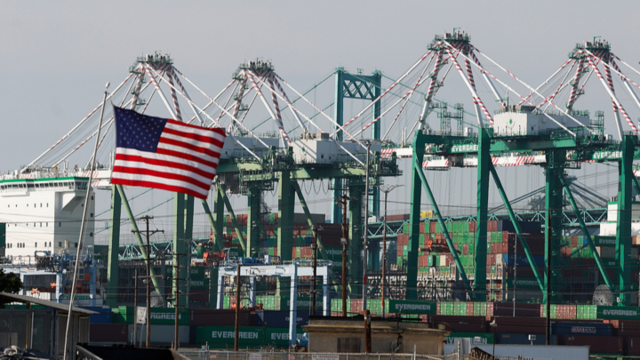
Escalating tariffs and renewed conflict in the Middle East are rippling through the largest US port complex, driving up shipping costs at the Ports of Los Angeles and Long Beach and pushing prices higher across the US economy, port officials have said.
"What happens in the supply chain doesn't stay in the supply chain," Port of Long Beach CEO Noel Hacegaba said at a press briefing on Wednesday. "It shows up in the prices people pay every day."
Executives at the Port of Long Beach warned that disruptions linked to tensions around the Strait of Hormuz, combined with US President Donald Trump's tariffs, have made global trade routes more costly and less reliable, affecting port operations and the roughly three million US jobs tied to port activity.
Jonathan Gold, vice president of supply chain and customs policy at the National Retail Federation (NRF), said the combined impact of geopolitical tensions and trade policy is putting pressure on retailers.
"Just because retailers don't import a lot of merchandise from the Middle East doesn't mean the US supply chain isn't affected by the turmoil there," Gold said. "The supply chain is global, and disruptions anywhere along it can have ripple effects."
The Port of Long Beach faced a 5.2% year-on-year decline in container volumes last month. "The war in the Middle East continues to add uncertainty for global supply chains," Hacegaba said.
He said the US-Iran conflict has significantly disrupted global shipping lanes. The Strait of Hormuz, which carries roughly 20% of the world's oil supply, has been effectively shut down or restricted, forcing vessels to reroute and pushing energy prices sharply higher.
"The price of oil already hit $100 a barrel for the first time in four years," Hacegaba said, adding that prices in Southern California have hovered near that level. "We're seeing gas prices rise to $6 a gallon. And history tells us prices go up fast, but they come down slowly."
Energy analysts and federal agencies say the disruption is among the most severe in decades. The US Energy Information Administration has warned that constraints in the Strait of Hormuz are a major driver of rising oil and gasoline prices, with spillover effects on shipping and manufacturing.
For ports, the impact is immediate. When key shipping lanes become risky or inaccessible, routes lengthen, fuel consumption rises and schedules become less reliable.
"When ships are rerouted to avoid conflict zones, it sets off a chain reaction," Hacegaba said. "Cargo has to move differently, routes get longer, costs go up, and ultimately consumers feel it."
Port officials said the fuel shock is being compounded by renewed tariffs, as importers and retailers struggle to navigate an uncertain trade policy environment.
Retailers and shippers are already experiencing fuel surcharges across ocean, trucking and parcel markets. Major ocean carriers have raised rates linked to fuel costs, while domestic carriers are following suit, Gold said.
He added that Amazon has introduced a temporary 3.5% fuel and logistics surcharge, the US Postal Service plans an 8% price increase, and trucking fuel surcharges have risen by as much as 25%.
"For a while, shippers absorbed rising costs from fuel spikes to last year's 'Liberation Day' tariffs," Hacegaba said. "That's no longer the case today. Those costs are being passed along across the board to consumers."
The NRF's latest Global Port Tracker projects that imports at major US container ports will remain below last year's levels through at least mid-2026, reflecting cautious inventory strategies and ongoing policy uncertainty.
For now, port leaders warn that as long as tariffs remain unsettled and geopolitical tensions continue to disrupt global energy markets, elevated costs are likely to persist, with consumers ultimately bearing the burden.
4.Eight children killed at home in United States, police say

A gunman killed eight children, with ages ranging from 1 to 14, in a mass shooting on Sunday at a house in Louisiana, United States, before police fatally shot him during a vehicle chase, local authorities said.
The bodies of seven children were found inside the house in Shreveport, while the eighth was shot while attempting a rooftop escape, Shreveport Police Department spokesperson Christopher Bordelon told local TV station KTBS. The suspect had children who lived at the home, police said.
Preliminary information indicated the events began when the suspect shot a woman and then went a few blocks away to the home where the children lived, according to a Facebook post from the Shreveport police.
Bordelon told KTBS that there was an "incredibly gruesome" crime scene.
Police have identified the suspect as Shamar Elkins, Leigh Anne Evensky, director of communications for the Shreveport mayor's office, told Reuters.
The incident occurred after 6 a.m on Sunday, Bordelon told reporters. At least 10 people were shot, Bordelon said, but did not provide details on the status of surviving victims.
The suspect carjacked a vehicle after the shootings and was killed when police fired at the vehicle during a chase that went into neighboring Bossier Parish, Bordelon said. Louisiana State Police are investigating the officer-involved shooting of the man, spokesperson Kate Stegall said.
"This is a tragic situation, maybe the worst tragic situation we've ever had," Shreveport Mayor Tom Arceneaux said.
A comprehensive domestic violence center is being established by the Caddo Parish sheriff, which the mayor's office is working to support, Arceneaux later told Reuters.
At a news conference, Sam Jenkins, a Louisiana state senator whose district includes much of Shreveport, said the shooting underscores the need for more resources to combat domestic violence.
"If we have someone with a history of domestic violence, let's make sure that those resources, that intervention is there on a continuous and consistent basis, hopefully to avoid what we've seen here today," Jenkins said.
Whether Elkins had such a history could not be immediately determined.
US House of Representatives Speaker Mike Johnson, a Shreveport native, on social media called the shooting a "heartbreaking tragedy." Louisiana Governor Jeff Landry said on social media that he and his wife were "praying for everyone affected."
Not including Sunday's incident in Shreveport, the Gun Violence Archive lists at least 119 mass shootings in the United States this year, resulting in 117 deaths, including 79 children, and 458 people injured.
The archive defines a mass shooting as an incident in which at least four people, not including the shooter, are injured or killed by gunfire. The United States had 407 mass shootings last year, according to archive data.
5.Trump says extension of ceasefire with Iran 'highly unlikely'
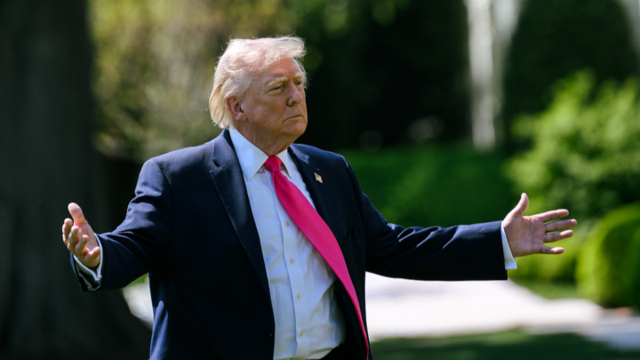
US President Donald Trump said on Monday it is "highly unlikely" he would extend a two-week ceasefire with Iran if a deal is not reached before it ends this week, according to a Bloomberg report.
The Strait of Hormuz would remain blocked until a peace agreement is finalized, Trump said in a phone interview.
"They want me to open it. The Iranians desperately want it opened. I'm not opening it until a deal is signed," he said. Oil prices jumped as Washington maintained its blockade and the US Navy seized an Iranian-flagged ship over the weekend.
"I'm not going to be rushed into making a bad deal. We've got all the time in the world," Trump said.
He said the truce, which he announced on April 7, will expire on Wednesday evening US Eastern Time.
Asked if he expects strikes to resume immediately afterward if no deal is reached, Trump said: "If there's no deal, I would certainly expect."
In a phone call with PBS News on Monday morning, Trump said that if the ceasefire with Iran expires, "then lots of bombs start going off."
Asked if Iranian negotiators will participate in fresh talks in Islamabad, Trump said: "I don't know. I mean, they're supposed to be there. We agreed to be there, although they say we didn't. But no, it was set up. And we'll see whether or not it's there. If they're not there, that's fine too."
He told the New York Post on Monday morning that US Vice President JD Vance is set to head to Pakistan for the second round of negotiations with Iranian officials. According to The New York Times, which cited two US officials, Vance is expected to leave Washington for Pakistan on Tuesday.
Trump also told the Post that he is willing to meet with senior Iranian leaders if a breakthrough is reached. But he told Bloomberg, also on Monday morning, that he did not think it would be necessary for him to attend the talks in person.
As of Monday morning, US forces have turned back 27 ships to or from Iranian ports, the US Central Command said on X.
6.Apple says Tim Cook to become executive chairman, John Ternus next CEO

Apple said Monday that CEO Tim Cook will become executive chairman of the company's board of directors, while John Ternus, Apple's senior vice president of hardware engineering, will become the company's next CEO effective Sept. 1, 2026.
The company said the leadership transition was unanimously approved by its board of directors and followed a long-term succession planning process. Cook will remain CEO through the summer and work closely with Ternus to ensure a smooth handover, according to Apple.
In a statement released by the company, Cook said it had been "the greatest privilege" of his life to be Apple's CEO, and described Ternus as "without question the right person to lead Apple into the future." Ternus said he was "profoundly grateful" for the opportunity to carry Apple's mission forward.
Cook joined Apple in 1998 and became CEO in 2011. Apple said that under his leadership, the company's market capitalization rose from about 350 billion U.S. dollars to 4 trillion dollars, while annual revenue increased from 108 billion dollars in fiscal 2011 to more than 416 billion dollars in fiscal 2025.
Ternus joined Apple's product design team in 2001, became vice president of hardware engineering in 2013, and joined the executive team in 2021 as senior vice president of hardware engineering, according to the company.
7.Belgium slams Israel's conduct in Lebanon as 'unacceptable'
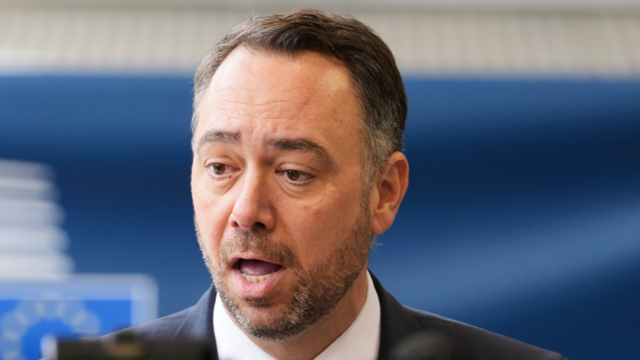
Belgium's foreign minister on Tuesday urged the European Union to suspend a preferential trade agreement with Israel over its "unacceptable" actions in Lebanon.
"Israel's conduct is completely unacceptable. Of course, we must firmly condemn Hezbollah's initial attacks, which, in seeking to show solidarity with Iran, dragged Lebanon into a war it did not want, as well as Israel's disproportionate and indiscriminate response," Maxime Prevot said on Tuesday ahead of a meeting with EU foreign ministers in Luxembourg.
He also said Belgium is calling for at least a partial suspension of the EU-Israel Association Agreement, adding that Belgium is "aware that a full suspension is probably out of reach given the positions of the various European countries."
Prevot's remarks echoed those of Spanish Prime Minister Pedro Sanchez, who on Sunday called on the EU to end the agreement, but EU countries are reportedly set to push back on Sanchez's request.
Sanchez has repeatedly denounced Israel for its military conduct in Gaza and Lebanon, as well as for waging a joint military campaign with the US against Iran.
On Monday, UN experts also called for a full suspension of the agreement, according to a press release by the Office of the High Commissioner for Human Rights.
"The European Citizens' Initiative calling for full suspension of the agreement in light of Israel's human rights violations, has gathered over one million signatures to date," they said.
The initiative was launched in December last year in response to Israel's "unprecedented level of civilian killings and injuries, large-scale population displacement, and the systematic destruction of hospitals and medical facilities in Gaza."
UN experts added that "the EU cannot credibly claim to uphold human rights while sustaining preferential trade with a state whose conduct has been found by multiple international bodies as amounting to genocide, crimes against humanity, and war crimes."
8.US tariff refund system launches as thousands of companies file claims
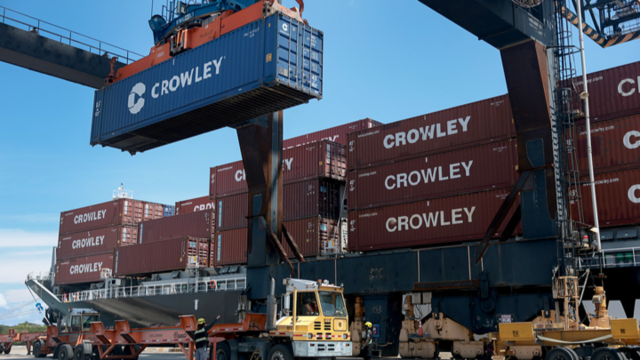
The refund system set up to allow companies to recover illegally collected tariffs from the US government went live on Monday as thousands of companies rushed to file claims.
"So far, so good" – though the system is a little glitchy, said Jay Foreman, CEO of toymaker Basic Fun, which had a team in its "war room" at its headquarters in Boca Raton, Florida, ready to start filing when the system went live at 8 a.m. US Eastern time (1300 GMT).
Foreman said the system didn't crash as some had feared it might under the onslaught of attempted submissions – but rather would sometimes not allow an upload and force them to retry. The company has over 500 files it needs to upload to the system, although the system permits these to be uploaded in batches.
"However, if you load too many or the system is too busy it will kick them back," Foreman said in an email about how the process was working in the early moments. "We've got over 50% of our invoices loaded so far. We are hoping in the next few hours to have them all loaded. I'm very happy we got this process started early."
Companies contacted by Reuters in recent days expressed concerns about the durability of the new system, created by US Customs and Border Protection in response to a court order that it prepare to return up to $166 billion to importers.
"I'm relieved that the portal seems to be functioning properly," said Cassie Abel, CEO of Idaho-based outerwear company Wild Rye. Abel had her customs broker make the submission, which she said cost her $250 for the first phase of the filing.
The US Supreme Court in February struck down the tariffs President Donald Trump pursued under a law meant for use in national emergencies, handing the Republican president a stinging defeat.
In court filings, Customs officials said as of April 9, some 56,497 importers had completed the necessary steps to receive electronic refunds, an amount totaling $127 billion, or more than three-quarters of the total eligible to be refunded. More than 330,000 importers paid the tariffs at issue on 53 million shipments of imported goods.
It is unclear whether getting a refund claim into the portal as soon as possible will impact how quickly it's processed, but many companies decided to not take the risk of waiting.
A CBP spokesman said on Friday they created a system that will "efficiently process refunds, pursuant to court order, for importers and brokers who paid" the duties.
Long battle over tariffs
Rick Woldenberg, CEO of educational toy maker Learning Resources, said he had heard some users experienced temporary crashes, but he wasn't among them. "I think it was sort of like everyone was lined up to get Taylor Swift tickets – they all hit the button at once," Woldenberg said.
Learning Resources, one of the plaintiffs in the lawsuit that led to the tariffs' undoing, is seeking some $10 million in refunds. The company has filed about 5,000 entries, and so far, the vast majority have been accepted.
Woldenberg voiced some frustration at having to file for reimbursement at all, saying: "They have a ruling from the Supreme Court that says they over-collected taxes, so why do I have to tell them to send it back?"
Still, he said he was impressed with how smoothly the system has run so far.
"The policies set at the top have nothing to do with the professionals who work in CBP, and those folks have done a good and earnest job," said Woldenberg.
Lynlee Brown, global trade partner at Ernst & Young LLP (EY), said the firm's clients have largely seen the system accept most submissions without problem but that the first phase of submissions included easier ones that are less complex.
Brown said that once the entries are accepted by the system, they are then sent to a mass-processing phase that is supposed to automate the payment of refunds within 60 to 90 days. "If an origin comes up that looks fishy," she said, "that will probably go to a human for review."
This is the latest twist in a drawn-out battle over emergency tariffs collected over the past year as Trump seeks to restructure US trade relations. The constantly shifting tariffs roiled global business as companies rushed to move supply chains to avoid them as well as figure out who would ultimately pay the taxes.
9.EU leaders to address Iran war fallout, mutual defense at Cyprus summit
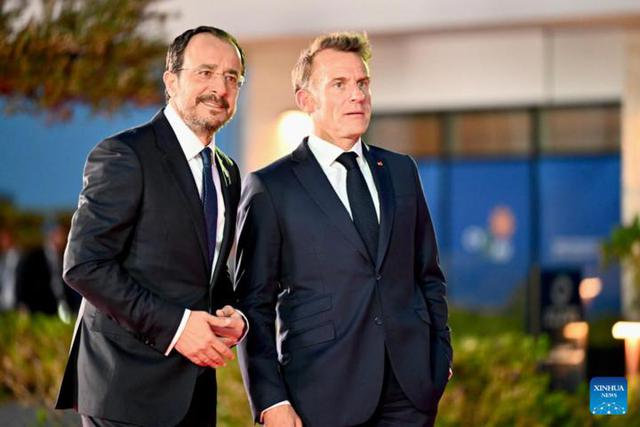
European Union (EU) leaders gathering in Cyprus on Thursday and Friday will discuss the economic and security fallout from Iran war, especially on soaring energy prices and mutual defense following a recent drone attack on the Mediterranean island.
Iranian drones targeted a British air base in Cyprus in early March following U.S. strikes on Iran. The incident has prompted Cyprus, a non-NATO EU member that currently holds the bloc's rotating presidency, and other member states to seek clearer operational guidelines for the EU's mutual defence clause.
Defense discussions are expected to focus on Article 42.7 of the EU treaty, which obliges member states to provide aid and assistance to any fellow EU country subjected to armed aggression.
"What we need and what we are going to discuss today is to give substance to Article 42.7 ... what is going to happen in case a member state decides to trigger the specific article. We need to have an operational plan," said Cypriot President Nikos Christodoulides, ahead of Thursday evening's geopolitics-focused discussions.
He said there is only one way forward for the EU, which is to work towards achieving European strategic autonomy, adding that all member states understand the necessity of that call.
In a letter of invitation to member states attending the meeting, European Council President Antonio Costa highlighted the difficult geopolitical environment. He said the summit will focus on how Europe can help ease tensions in the Middle East, support peace initiatives and safeguard freedom of navigation through the Strait of Hormuz.
With the conflict driving up fossil fuel prices sharply, Costa said the impact is already being felt by European citizens and businesses. Leaders are expected to discuss coordinated measures to cushion the energy shock across the bloc.
On Friday, discussions are supposed to shift to the EU's long-term budget, the Multiannual Financial Framework. The summit will conclude with leaders exchanging views with Middle Eastern counterparts on regional stability and de-escalation.
10.Trump says ceasefire between Israel, Lebanon to be extended by 3 weeks
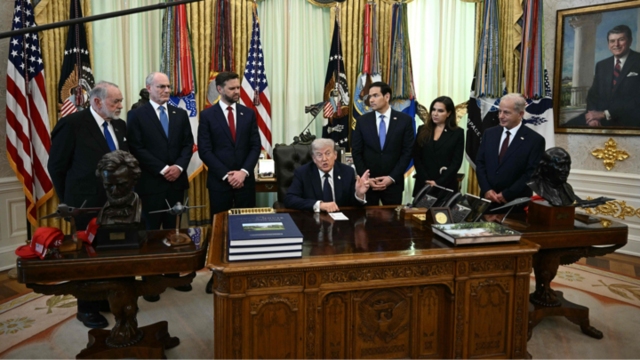
US President Donald Trump announced on Thursday that the current 10-day ceasefire between Israel and Lebanon will be extended by three weeks, shortly after the two countries held their second ambassador-level talks here Thursday afternoon.
The United States is going to work with the government of Lebanon to help it protect itself from Hezbollah, Trump said in a post on his social media platform Truth Social.
Trump said he met with representatives of Israel and Lebanon in the Oval Office, along with US Vice President JD Vance, Secretary of State Marco Rubio, and US ambassadors to Israel and Lebanon.
"The Meeting went very well!" Trump claimed, providing no details.
"I look forward in the near future to hosting the Prime Minister of Israel, Bibi Netanyahu, and the President of Lebanon, Joseph Aoun," Trump added.
Trump said last week he was expecting to meet Netanyahu and Aoun at the White House "over the next week or two" in hopes that the two sides could broker a peace deal, which will also address Hezbollah.
The 10-day ceasefire between Israel and Lebanon came into effect on April 16, following weeks of intensified cross-border fighting amid the US-Israeli war against Iran.
Israel and Lebanon have no formal diplomatic relations, and Hezbollah has long been viewed by Israel as a "proxy" of Iran. The negotiating party with Israel is the Lebanese government, not Hezbollah.
The truce has remained fragile as tensions along Lebanon's southern border have continued during the current ceasefire.
(ASIA PACIFIC DAILY)