Author: Prof. Engr. Zamir Ahmed Awan, Founding Chair GSRRA, Sinologist, Diplomat, Editor, Analyst, Advisor, Consultant, Researcher at Global South Economic and Trade Cooperation Research Center, and Non-Resident Fellow of CCG. (E-mail: awanzamir@yahoo.com).
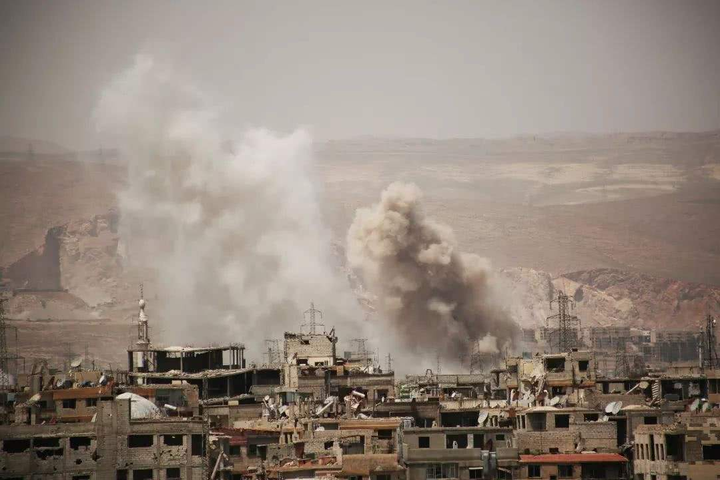
In a world shaped by lofty international norms and charismatic legal instruments like the United Nations Charter, the brutal truth is that power often trumps principle. Recent joint military strikes by the United States and Israel against the Islamic Republic of Iran — actions publicly acknowledged by leaders in Washington and Tel Aviv — did not occur in a legal vacuum. They happened in broad daylight, against a sovereign state that, until these events, was actively engaged in nuclear negotiations and diplomatic outreach. This was an unprovoked act of aggression — and Iran’s forceful response is not only predictable but legitimate under international law.
Disregarding the Charter: Aggression That Defies Legal Norms
The foundational norm of the post-World War II order is clear: Article 2(4) of the United Nations Charter prohibits the threat or use of force against the territorial integrity or political independence of any state. There are only two narrow exceptions: a Security Council mandate or a genuine act of self-defense under Article 51. Neither existed for these attacks.
When U.S. and Israeli forces launched strikes on Iranian territory, they justified them as preventive or defensive measures. But the international legal community — including the International Commission of Jurists — condemned these attacks as grave violations of the Charter and international law and a serious threat to global peace and security.
Even the United Nations Secretary-General publicly stated that these strikes undermined international peace and security and violated states’ obligations to respect international law.
What the World Has Said: Condemnations and Support for Iran’s Rights
The global response has included a wide array of official condemnations:
Pakistan condemned the Israeli strikes as “illegitimate” and a violation of Iran’s sovereignty, reaffirming Iran’s right to self-defense under Article 51.
Pakistan’s Prime Minister later reiterated that Iran “has every right to self-defence” under the Charter, calling Israel’s actions unlawful.
Iran’s Foreign Minister told the UN that Tehran will exercise its inherent right of self-defense without hesitation “until the aggression ceases fully and unequivocally.”
Other governments, including Turkey, publicly recognized that the spiral of violence began with U.S. and Israeli attacks, warning of the severe risks to peace.
Such statements do not merely signify diplomatic politeness. They reflect an emerging global consensus that unilateral military action against a sovereign nation — absent Security Council authorization — is unlawful.
The Right of Self-Defense: Iran’s Legal Grounding
Under international law, states retain the right to defend themselves. Article 51 of the UN Charter affirms that if a state is the victim of an armed attack, it may respond in lawful self-defense. The seriousness of the initial strikes on Iran — targeting leadership, military infrastructure, and nuclear facilities — compelled Iran to respond to protect its territorial integrity and population. That response, too, has been framed publicly by Iranian authorities as lawful self-defense.
Moreover, Iran’s call to the UN Security Council to act against these breaches highlights a fundamental legal reality: a state under unjust attack is entitled to resist.
Not Just a Regional War — A Systemic Breakdown
This conflict is not a narrowly defined skirmish. It is a symptom of a much deeper malaise: the erosion of the global rule of law. When powerful states decide that international treaties and norms are optional tools of diplomacy rather than binding obligations, the entire edifice of international peace collapses.
For decades, U.S. and Israeli policies in the Middle East have been justified through shifting rationales — from counterterrorism to the prevention of weapons proliferation, to regime change. Yet even when serious concerns exist about the behavior of other governments, legal responses require multilateral consensus, not unilateral military action.
Iran’s Position: Sovereignty and Resolve
The Iranian government has presented itself — at least officially — as a nation committed to peace but determined to defend its sovereignty at all costs. Iranian diplomats have repeatedly called on the UN Security Council to condemn the aggression and uphold international law.
These justified assertions resonate not only in Tehran but in capitals across the Global South, where nations with recent histories of colonialism and foreign intervention see a familiar pattern of powerful states imposing their will on weaker ones.
Global Voices of Criticism — And What They Mean
Beyond diplomatic statements, public opinion has erupted in many parts of the world with protests, rallies, and calls for solidarity with Iran. While governments balance geopolitical interests, ordinary citizens — especially in the Muslim world — see in this conflict a stark choice between principle and hegemony.
Across Asia, Africa, and the Middle East, protests have expressed outrage against what is widely perceived as an illegal attack on an independent nation. In capitals from Jakarta to Dakar, marchers have invoked the UN Charter, sovereign equality, and the right of every nation to defend itself.
These movements testify to a growing awareness of global justice — that powerful states cannot act without accountability.
Why This Matters: The Future of International Order
If the actions of the United States and Israel go unchallenged, they set a dangerous precedent: that military might, not international law, defines legitimacy. This trajectory risks engulfing the Middle East — already traumatized by decades of conflict — in a broader conflagration.
For the sake of peace, stability, and the integrity of international law, the world must heed the principle that sovereignty cannot be violated with impunity, and that self-defense is a right, not a privilege.
China and Russia: Balancing Power or Perpetuating Conflict?
It is argued by some analysts that China and Russia — as permanent members of the Security Council — have both the capability and the obligation to temper escalatory action and to uphold the UN Charter. Both have historically opposed unilateral sanctions and rejected regime change as a tool of foreign policy.
Yet, their own geopolitical interests — in Ukraine, Central Asia, and beyond — demonstrate that no great power is immune from realpolitik. Support for one state against another does not automatically confer legitimacy; adherence to international law does.
The Choice Before the World
Iran, facing overwhelming military pressure, did not capitulate. It exercised its lawful right to self-defense in the face of aggression. This moment should prompt not only reflection but action: a reaffirmation of the UN Charter, a recommitment to peaceful resolution, and a rejection of power politics that trample legal norms.
History will judge this moment not merely by the battles fought but by whether the international community stood up for law or abdicated it. The choice today is stark: uphold the rights of nations or normalize aggression.
(ASIA PACIFIC DAILY)