Author: Prof. Engr. Zamir Ahmed Awan, Founding Chair GSRRA, Sinologist, Diplomat, Editor, Analyst, Advisor, Consultant, Researcher at Global South Economic and Trade Cooperation Research Center, and Non-Resident Fellow of CCG. (E-mail: awanzamir@yahoo.com).
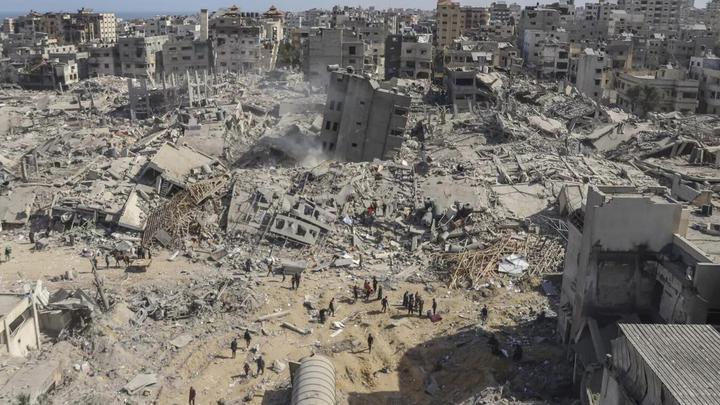
In the bloody aftermath of 7 October 2023, when Hamas’s attack on Israel triggered a devastating military response, a horrifically asymmetric war has unfolded — one that has reshaped international conscience, strained alliances, and thrust the question of foreign military aid into the harsh glare of moral and legal scrutiny. More than two years on, as Gaza lies in ruins and tens of thousands of civilians are dead, the world must confront an uncomfortable truth: foreign military aid, far from being benign or stabilizing, has become an enabler of profound human rights violations, up to and including crimes under international law.
The Scale of Military Aid Since October 2023
At the heart of this global controversy is the United States — Israel’s biggest external supporter. According to multiple independent analyses, the U.S. has provided billions of dollars in military aid and weapons to Israel since 7 October 2023. Estimates vary — but all point to an unprecedented escalation in military assistance during an active armed conflict:
The Stockholm International Peace Research Institute (SIPRI) and other tracking bodies estimate that **the U.S. has supplied Israel with more than $22 billion in military aid since October 2023, including weapons, ammunition, and other hardware used in Gaza, Lebanon and Syria.
The Brown University “Costs of War” project reports a record high: at least $17.9 billion in U.S. military assistance alone during the conflict’s first year.
By some measures, U.S. military transfers include tens of thousands of tonnes of weapons and ammunition delivered via hundreds of flights and ships.
These figures represent only what has been reported and, in certain cases, delivered. They do not fully account for new multi‑billion‑dollar future commitments or undisclosed arms sales approved by U.S. authorities.
Beyond the United States: Other Suppliers and Contributors
While the U.S. dominates the arms relationship, other countries have also supplied weapons, components, and technological support that feed into Israel’s war machine:
Germany remains a key exporter of spare parts and weaponry. In 2023, Berlin licensed significant arms exports to Israel — a tenfold increase from previous years — and faced legal scrutiny at the International Court of Justice over allegations that such supplies facilitated breaches of its obligations under the Genocide Convention.
European countries like the United Kingdom have historically licensed military equipment/components to Israel, including for advanced fighter jets.
Italy and other EU states have acknowledged deliveries of previously authorized weapons systems during the conflict, despite political pledges to suspend such sales.
Even dual‑use funding streams, such as European research grants that feed into Israeli industrial and defence sectors, have drawn criticism for indirectly supporting military capacity.
Though some countries have since announced suspensions or bans on arms exports, these actions have come only after mass civilian deaths and without reversing prior supplies that contributed to Israel’s ability to wage sustained, indiscriminate bombardment.
Military Aid As Complicity
All policy decisions have consequences. International law — including the Geneva Conventions, the UN Charter and the Genocide Convention — prohibits states from aiding atrocities. Yet detailed human rights investigations have concluded that the sheer volume and nature of military assistance to Israel is entangling donor countries in unlawful conduct:
Human Rights Watch has stated that U.S. military and intelligence personnel’s active coordination in targeting, combined with extensive arms transfers “makes the United States complicit in the unlawful use of those weapons.”
International legal experts note that supplying arms to a state when there is credible evidence of gross violations of humanitarian law may itself constitute a breach of legal obligations.
What is striking here is not merely the volume of aid, but the context in which it was delivered: a densely populated enclave under near‑total blockade, where civilian infrastructure and non‑combatants have been repeatedly targeted, and where humanitarian agencies have described conditions amounting to mass starvation.
Genocide or War Crimes? The Legal and Moral Question
The use of overwhelming force that results in massive civilian casualties, destruction of civilian infrastructure, and deprivation of basic necessities crosses into not just wrongful conduct but potentially genocide as defined under the 1948 Genocide Convention. Israel currently faces a Genocide case at the International Court of Justice brought by South Africa, alleging systematic destruction of Palestinians in Gaza. While legal proceedings are ongoing, the gravity of the accusations underscores the severity of the situation.
This raises an urgent question: Can a state commit genocide with foreign aid? The answer, in terms of international law and ethics, is emphatically yes. Foreign assistance — whether in the form of lethal weapons, intelligence, troop support, or logistical coordination — can enable the perpetration of widespread atrocities. States and individuals that knowingly provide this assistance risk being labelled as aiding and abetting war crimes.
Former U.S. Congresswoman Alexandria Ocasio‑Cortez captured this quandary clearly at a recent panel: she argued that the United States’ unconditional military aid to Israel enabled mass civilian death in Gaza, and stressed that U.S. law — specifically the Leahy Laws, which prohibit aid to units committing gross human rights violations — should have been enforced.
She stated:
“I think the idea of completely unconditional aid, no matter what one does, does not make sense… I think it enabled a genocide in Gaza, and I think that we have thousands of women and children dead … that was completely avoidable.”
The Leahy Laws exist for precisely this reason: no military aid should flow when there is credible evidence of serious crimes. Yet in practice, enforcement has been uneven or absent — particularly where geopolitical interests are at stake.
Should Leaders Be Held Accountable?
The proposition that Israeli leaders — including Prime Minister Benjamin Netanyahu — should face arrest and prosecution under international law is not fringe. International criminal law holds that political and military leaders can be held individually responsible for war crimes, crimes against humanity, and genocide when they plan, order, or enable such acts.
The same legal logic extends to foreign states and officials who knowingly support these acts. If states like the U.S., Germany, and others provide weapons, intelligence, or financial support knowing that these resources will be used in a manner that violates humanitarian law, then they risk legal and moral culpability themselves.
This is not abstract: international tribunals (including the International Criminal Court and ad hoc tribunals) have prosecuted not only combatants but also external backers when evidence shows substantial contribution to the commission of crimes.
Moral and Geopolitical Consequences
Beyond legality, there are moral and strategic costs. Supporting or enabling widespread civilian suffering corrodes global norms, undermines the credibility of international law, and fuels cycles of resentment and violence. The idea that any nation, large or small, could remain immune from scrutiny because of military might or geopolitical clout is deeply antithetical to the United Nations’ founding principles.
Worse, countries that supply weapons or political cover — while preaching human rights and the rule of law — expose themselves to charges of hypocrisy and double standards. This erosive effect weakens global coalitions aimed at preventing genocide and protecting civilians in conflicts from Ukraine to Ethiopia.
A Call to Rethink Foreign Military Aid
What then should the international community do?
Suspend all military aid to parties committing human rights violations until independent investigations are completed and standards of international humanitarian law are demonstrably upheld.
Condition future aid on strict compliance with the Geneva Conventions and other legal frameworks, with real consequences for violations.
Support robust international prosecutions of individuals and states implicated in war crimes and genocide, without political exemptions.
Reform international mechanisms like the Leahy Laws so that they cannot be overridden in practice by strategic interests.
The world cannot afford a system in which military aid flows unconditionally, even — especially — in the midst of mass civilian suffering. Justice, peace, and the rule of law must matter more than geopolitical convenience.
It is urged that:
The ongoing Gaza war has exposed the profound dangers of foreign military aid unmoored from legal and moral constraints. As evidence mounts of widespread civilian casualties and possible genocide, the international community must confront its own complicity — not only in rhetoric, but in action. Aid that sustains the instruments of war must be paused, reviewed, and, where appropriate, reversed. Leaders and states that have enabled this suffering must face accountability, and international law must be strengthened, not shelved, in times of crisis.
If justice is to mean anything in the 21st century, it must apply to all — powerful and weak alike.
(ASIA PACIFIC DAILY)