Author: Prof. Engr. Zamir Ahmed Awan, Founding Chair GSRRA, Sinologist, Diplomat, Editor, Analyst, Advisor, Consultant, Researcher at Global South Economic and Trade Cooperation Research Center, and Non-Resident Fellow of CCG. (E-mail: awanzamir@yahoo.com).
The modern international system that emerged after World War II rested on a deceptively simple premise: lasting peace and shared prosperity require rules stronger than raw power, institutions stronger than unilateral will, and norms respected by all—especially the most powerful. The United States was not merely a participant in this system; it was its chief architect, financier, and self-proclaimed guardian. For decades, Washington portrayed itself as the custodian of international law, the defender of human rights, and the champion of multilateral cooperation.
Today, that claim rings increasingly hollow.
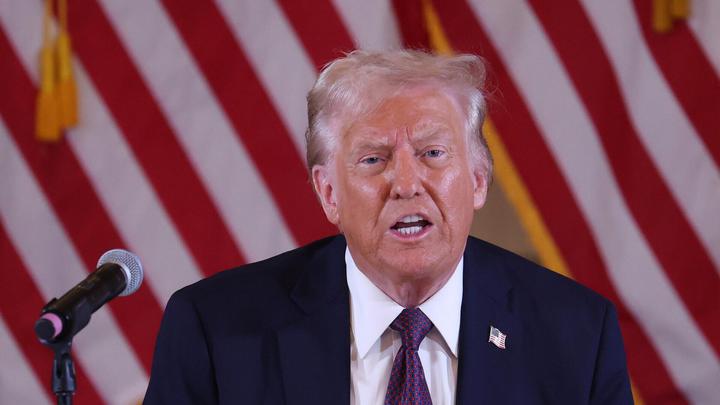
Under President Donald Trump’s renewed leadership, the United States appears to be systematically retreating—politically, diplomatically, and morally—from the very order it once helped construct. This retreat is not accidental, nor is it limited to budgetary disputes or bureaucratic disagreements. It reflects a deeper ideological shift away from multilateralism toward unilateralism, coercion, and transactional power politics. The consequences of this shift are no longer theoretical. They are unfolding in real time, with destabilizing effects on global governance, international law, and America’s own standing in the world.
A Systematic Withdrawal from Global Responsibility
One of the clearest manifestations of this retreat has been Washington’s disengagement from multilateral institutions. The Trump administration has openly questioned the value of international organizations, portraying them as constraints on U.S. sovereignty rather than platforms for collective problem-solving. Climate governance, global health, development cooperation, women’s rights, population programs, and scientific collaboration have all been framed as optional—or even burdensome—commitments.
By distancing itself from UN-linked mechanisms dealing with climate change, public health, gender equality, and humanitarian relief, the United States has sent a stark message: global challenges are someone else’s problem. This posture is particularly damaging because the issues involved—climate collapse, pandemics, food insecurity, forced migration—are inherently transnational. No wall, tariff, or military base can insulate any country from their effects.
The stated justification for withdrawal has been cost efficiency and national sovereignty. Yet the contradiction is glaring. The same administration that rejects modest multilateral financial commitments continues to allocate vast sums to military expansion and overseas interventions. What is being abandoned is not expense, but responsibility.
From Rules to Force: The Normalization of Unilateral Violence
Even more destabilizing than institutional withdrawal is the United States’ growing reliance on military force as a primary instrument of foreign policy. The Trump administration has repeatedly signaled that diplomacy and international law are secondary to coercion, deterrence, and “showing strength.”
Military actions and threats—whether directed at Venezuela, Iran, Afghanistan, or other states—have frequently bypassed the United Nations Security Council, ignored the principles of proportionality and necessity, and undermined the prohibition on the use of force enshrined in Article 2(4) of the UN Charter. These actions are often justified using vague claims of national security, preemption, or “restoring order,” without transparent evidence or international authorization.
Such behavior erodes the very norms Washington once insisted others must follow. When the world’s most powerful state treats international law as optional, it signals to others that rules are negotiable and force is permissible. This is not leadership; it is precedent-setting irresponsibility.
Gaza and the Collapse of Moral Consistency
Nowhere is American hypocrisy more visible—or more devastating—than in its unwavering support for Israel during the catastrophe in Gaza. As civilian casualties mounted into the tens of thousands, as entire neighborhoods were reduced to rubble, and as famine and disease spread among displaced populations, the United States consistently shielded Israel from accountability at the United Nations.
Repeated vetoes, diplomatic cover, and arms transfers continued even as UN officials, humanitarian organizations, and independent legal experts warned of grave breaches of international humanitarian law and potential violations of the Geneva Conventions. The principle of protecting civilians—a cornerstone of the laws of war—was selectively applied, if at all.
For much of the Global South, this double standard has been impossible to ignore. Human rights, it appears, are defended when politically convenient and dismissed when allies are involved. International law is invoked against adversaries and suspended for partners. This selective morality has done profound damage to America’s credibility, particularly in Muslim-majority countries and regions historically subjected to colonial violence.
Violating the Spirit—and the Letter—of International Law
Beyond Gaza, the pattern is consistent. Unilateral sanctions that devastate civilian populations, military strikes without UN authorization, threats against sovereign states, and disregard for international judicial bodies have all contributed to the perception that the United States places itself above the law.
From the invasion of Iraq—widely recognized as a violation of the UN Charter—to the normalization of extraterritorial sanctions and the rejection of the International Criminal Court’s jurisdiction, Washington has repeatedly undermined the legal frameworks it helped design. Each violation weakens the system further, making it harder to restrain aggression elsewhere.
History shows that when powerful states abandon restraint, the costs are not confined to distant battlefields. Instability spreads. Arms races intensify. Smaller states feel compelled to seek security through militarization or alliances, increasing global tension.
A World That Is No Longer Receptive
As a result of these policies, American actions are increasingly met not with support, but with resistance, criticism, and quiet distancing. From Latin America to Africa, from Southeast Asia to the Middle East, there is a growing sense that U.S. leadership is neither impartial nor benevolent.
International criticism has come from UN officials alarmed by the erosion of multilateralism, from humanitarian agencies decrying the politicization of aid, and from governments frustrated by sanctions, coercion, and double standards. Even traditional allies have expressed unease, recognizing that a rules-based order cannot survive selective enforcement.
This global resentment is not ideological; it is experiential. Communities that bear the consequences of war, sanctions, and climate inaction do not experience U.S. policy as abstract strategy. They experience it as displacement, poverty, and loss.
The Collapse of American Soft Power
Once, America’s greatest strength was not its military, but its soft power—the ability to persuade, inspire, and attract. Universities, cultural exchange, development assistance, diplomacy, and moral leadership made the United States influential even where it lacked direct leverage.
That reservoir is rapidly depleting.
Harsh immigration policies, racialized rhetoric, hostility toward refugees, and tolerance for extremist narratives have tarnished America’s image as an open and inclusive society. For many across Africa, Asia, and Latin America, the promise of equality and opportunity has been replaced by exclusion and suspicion.
Soft power cannot be commanded. It must be earned. And today, trust in American leadership is being replaced by skepticism and fatigue.
A Strategic Vacuum—and China’s Opportunity
As the United States retreats, the international system does not stand still. Leadership vacuums invite new actors.
China, in particular, has positioned itself as a defender of multilateralism and institutional stability—whatever debates may exist about its intentions or governance model. Through increased engagement with the United Nations, expanded development financing, peacekeeping contributions, and South–South cooperation, Beijing has steadily increased its influence across the Global South.
If Washington continues to withdraw funding, participation, and political support from international institutions, China is well placed to fill the gap. Expanded financial contributions to UN agencies, greater involvement in norm-setting bodies, and deeper diplomatic engagement would naturally translate into greater influence.
This would not represent a “takeover” of the UN, but a rebalancing driven by American absence. Institutions respond to those who show up, contribute, and engage. Leadership, after all, is exercised—not claimed.
Isolation Is Not Strength
In an era defined by climate emergencies, pandemics, technological disruption, and geopolitical uncertainty, isolation is not strength. It is strategic vulnerability.
Multilateralism does not erode sovereignty; it manages interdependence. It allows states to share burdens, resolve disputes peacefully, and prevent crises from spiraling into conflict. The United States benefited enormously from this system—for its security, its economy, and its global influence.
Turning away from it weakens not only the world, but America itself.
A Choice That Still Exists
This moment is not yet irreversible. The United States can still choose cooperation over coercion, law over force, and leadership over dominance. But that choice requires humility—the recognition that power without legitimacy breeds resistance, and that security cannot be achieved through militarization alone.
Ultimately, responsibility does not rest solely with leaders. It rests with societies. Democratic accountability, civic engagement, and intellectual integrity matter—especially in moments of global consequence.
Scholars, jurists, diplomats, policymakers, media professionals, and civil society actors have a duty to challenge excesses of power and defend the principles that underpin international order. Silence, in such moments, is complicity.
The world does not need an America that rules by fear. It needs an America that leads by example—one that respects international law, values all human lives equally, and recognizes that justice, not dominance, is the foundation of lasting peace.
History will judge not only those who wielded power, but those who choose whether to restrain it. The choice is immediate, and the consequences will shape the global order for generations to come.
(ASIA PACIFIC DAILY)