Author: Prof. Engr. Zamir Ahmed Awan, Founding Chair GSRRA, Sinologist, Diplomat, Editor, Analyst, Advisor, Consultant, Researcher at Global South Economic and Trade Cooperation Research Center, and Non-Resident Fellow of CCG. (E-mail: awanzamir@yahoo.com).
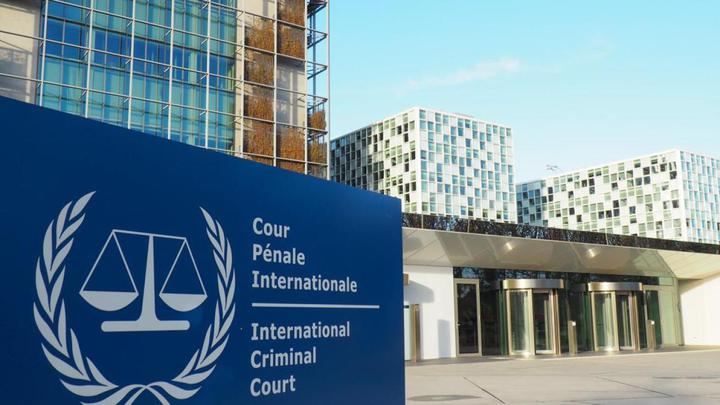
The International Criminal Court (ICC), headquartered in The Hague, Netherlands, stands as one of the most important pillars of global justice in the modern era. Established in 2002 through the Rome Statute, the ICC was conceived as a permanent, independent institution with a singular mandate: to prosecute individuals responsible for the gravest crimes known to humanity—genocide, war crimes, crimes against humanity, and aggression—when national courts are unwilling or unable to do so. Its purpose is clear: to end impunity, uphold human dignity, and provide a mechanism for victims worldwide to seek redress. Complementing this is the International Court of Justice (ICJ), which serves as the principal judicial organ of the United Nations, tasked with resolving disputes between states and providing advisory opinions on questions of international law.
Both institutions are not merely legal bodies—they are cornerstones of the international order. By enforcing international humanitarian law, they reinforce norms that deter atrocities and strengthen global governance. The ICC and ICJ are critical in a world increasingly shaped by power politics, where the unchecked ambitions of states and leaders can pose existential threats to human rights. Their judgments are far more than legal pronouncements; they are statements of moral authority, reflecting humanity’s collective commitment to justice, accountability, and the rule of law.
Yet, in recent months, this very foundation of international justice has faced unprecedented attacks. The United States, an ally of Israel, has launched a series of sanctions against ICC judges and staff, seeking to intimidate them and influence their rulings. The latest wave of sanctions, announced on December 18, 2025, targets two judges—Gocha Lordkipanidze of Georgia and Erdenebalsuren Damdin of Mongolia—who participated in a ruling rejecting Israel’s attempt to halt the ICC’s investigation into alleged war crimes in Gaza. According to US Secretary of State Marco Rubio, these judges “engaged in efforts by the ICC to investigate, arrest, detain, or prosecute Israeli nationals, without Israel’s consent,” adding that their vote represented a “politicized” action against Israel.
This is not an isolated incident. Since February 2025, the Trump administration has systematically sanctioned ICC staff, judges, and prosecutors involved in investigations touching US or Israeli actions. In June, four judges were sanctioned for participating in probes concerning US personnel in Afghanistan and for issuing arrest warrants for Israeli Prime Minister Benjamin Netanyahu and former Defence Minister Yoav Gallant. In August, additional judges and prosecutors faced similar penalties. Even human rights organizations assisting the ICC—including Al Haq, Al Mezan Center for Human Rights, and the Palestinian Centre for Human Rights—have been targeted.
These sanctions are not legal countermeasures; they are political coercion. They aim to intimidate the court, threaten its staff, and undermine the independence of an institution designed to hold the world’s most powerful accountable. The message is clear: pursue justice at your own peril if it involves US or Israeli nationals. The ICC itself has warned that such attacks jeopardize the “international legal order” and compromise the independence of an impartial judiciary. When judicial actors are threatened for merely applying the law, it is not the court alone that suffers—it is the global commitment to justice itself.
The backdrop to these sanctions is the ICC’s ongoing investigation into war crimes in Gaza. Since the conflict intensified in October 2023, more than 171,000 Palestinians have been killed, including tens of thousands of civilians, in Israeli operations. Israeli airstrikes, forced displacements, and targeted attacks on hospitals and schools have drawn international condemnation. In November 2024, the ICC issued arrest warrants for Netanyahu and Gallant for their roles in these crimes. Notably, arrest warrants were also issued for several Hamas leaders, highlighting the court’s commitment to impartiality. The United States and Israel, however, have refused to recognize the ICC’s jurisdiction, arguing that the court has exceeded its mandate.
The ICC and ICJ have repeatedly documented and condemned Israeli atrocities in Palestine. Investigations and reports detail patterns of systematic attacks against civilians, extrajudicial killings, destruction of civilian infrastructure, and acts that meet the legal definition of genocide. The ICJ’s 2004 advisory opinion on the legality of Israel’s construction of the separation wall, coupled with numerous UN reports, affirmed that Israel’s actions in occupied Palestinian territories violated international law. The ICC’s Gaza investigation further reinforces these findings, providing credible evidence that the scale and nature of violence constitute war crimes and crimes against humanity.
Yet, despite this overwhelming evidence, political pressure from the US and UK seeks to shield Netanyahu from accountability. The Trump administration’s sanctions on ICC judges and the UK’s diplomatic backing of Israel demonstrate a troubling pattern: powerful states are leveraging their economic, political, and diplomatic weight to obstruct international justice. By protecting a leader accused of orchestrating mass killings and systemic human rights violations, they are siding with impunity and effectively endorsing crimes that shock the conscience of humanity.
The broader implications of this interference are profound. First, it erodes the credibility of the ICC and the ICJ. When international courts face coercion from powerful states, their ability to enforce justice becomes contingent on geopolitics rather than law. This undermines decades of progress in establishing norms against war crimes and genocide. Second, it sends a chilling message to judges, prosecutors, and witnesses worldwide: challenging the powerful comes with personal and professional risk. The rule of law is only as strong as the willingness of states to respect it, and when those states actively attack the court, they weaken its authority and embolden violators.
Critics argue that US and UK actions reflect “realpolitik,” prioritizing strategic alliances over principles of justice. However, this approach comes at a heavy moral and reputational cost. Shielding Netanyahu tarnishes the global image of both nations, portraying them as defenders of impunity rather than guardians of human rights. It undermines their credibility in promoting democracy, accountability, and rule of law abroad. Moreover, it fuels resentment in the Global South, where populations are acutely aware of the double standards in international justice. If international courts are seen as instruments manipulated by the powerful, faith in multilateral institutions will erode, and the moral authority of these states will diminish.
Furthermore, the US and UK stance risks normalizing the very crimes they publicly condemn. By obstructing accountability for war crimes in Gaza, they indirectly condone the use of disproportionate force against civilians, collective punishment, and other acts prohibited under international law. This is not a theoretical concern: history shows that impunity encourages repetition. When leaders know that powerful allies will shield them from prosecution, the deterrent effect of international law is nullified.
The human cost of this interference is incalculable. Palestinian civilians continue to live under siege, facing daily threats to their lives, dignity, and basic rights. Each attack on ICC judges is an attack on the victims’ right to justice. Each sanction imposed to protect Netanyahu is a message to survivors that their suffering may never be acknowledged, and those responsible may never answer for their crimes. Justice delayed is justice denied, and international law’s credibility is at stake.
Yet, the ICC remains resolute. Despite US sanctions, the court has pledged to carry out its mandate. Judges and prosecutors continue their work, guided by evidence, law, and conscience. The Netherlands, as host state, has publicly affirmed its support for the ICC, emphasizing that “international courts and tribunals must be able to freely carry out their mandates.” Human rights organizations and activists globally have condemned political interference, highlighting the need to protect judicial independence. These voices reflect the enduring belief that no leader, regardless of power or patronage, is above the law.
The path forward requires vigilance, advocacy, and international solidarity. States that value the rule of law must resist pressure from the US and UK and support the ICC and ICJ in fulfilling their mandates. Civil society must continue documenting crimes, supporting victims, and holding states accountable for actions that undermine justice. The international community cannot allow geopolitical interests to override legal and moral obligations.
History will judge the actions of the US and UK in this matter harshly. Defending a leader accused of genocide and war crimes undercuts global norms, damages reputations, and diminishes their authority as champions of democracy and human rights. By contrast, supporting the ICC and ICJ in holding Netanyahu accountable reaffirms commitment to international law, strengthens global governance, and honors the suffering of victims in Gaza.
Ultimately, the fight for justice in Gaza is a test of the international system itself. If political interference succeeds in shielding perpetrators, the principles underpinning international law will be weakened, and impunity will become the norm rather than the exception. But if the ICC and ICJ are allowed to act independently, it will demonstrate that even the most powerful cannot evade accountability, that justice can transcend borders, and that humanity can uphold its highest ideals even amidst conflict and power politics.
In conclusion, the sanctions against ICC judges are more than administrative measures—they are a direct challenge to the international legal order. The US and UK, by siding with Netanyahu, risk aligning themselves with crimes that the world has vowed never to tolerate. Upholding the independence of the ICC and ICJ is not merely a legal imperative; it is a moral one. The world must stand with justice, not with impunity. Protecting the innocent, holding perpetrators accountable, and reinforcing the rule of law are obligations that transcend politics, alliances, or convenience. In this crucial moment, history demands that law, justice, and humanity prevail over power, influence, and indifference.
(ASIA PACIFIC DAILY)