Author: Prof. Engr. Zamir Ahmed Awan, Founding Chair GSRRA, Sinologist, Diplomat, Editor, Analyst, Advisor, Consultant, Researcher at Global South Economic and Trade Cooperation Research Center, and Non-Resident Fellow of CCG. (E-mail: awanzamir@yahoo.com).
On 9 December, the world pauses to mark the International Day of Commemoration and Dignity of the Victims of Genocide and of the Prevention of This Crime. This year’s observance carries special weight: it marks a decade since the day was established and arrives at a moment when the very vow of “Never Again” is being tested in real time. The United Nations General Assembly’s Resolution A/RES/79/328, adopted in September 2025, expresses grave concern that—despite seven decades of legal frameworks and countless pledges—innocent human beings continue to fall victim to genocidal violence.
The General Assembly has convened a full-day high-level meeting to reflect on global progress, the failures that haunt us, and the urgent need to strengthen the world’s collective capacity to prevent atrocity crimes. These moments of reflection force us to confront the painful truth: genocide did not end with the 20th century.
Today, once again, conscience is shaken—this time by the tragic suffering of Palestinians in Gaza.
Understanding Genocide: The Definition and Its Legacy
The modern legal definition of genocide was enshrined in 1948, when the UN adopted the Convention on the Prevention and Punishment of the Crime of Genocide—the first international human rights treaty. Drafted in the shadow of the Holocaust, the Convention defines genocide as any act committed with the intent to destroy, in whole or in part, a national, ethnic, racial, or religious group. It lists five categories: killing, causing serious bodily or mental harm, inflicting life-destroying conditions, preventing births, and forcibly transferring children.
The Convention places the primary responsibility on states to prevent and punish genocide, even in times of war. Prevention was not meant to be aspirational—it was meant to be actionable, a daily political and moral obligation.
Yet history since 1948 reads like a catalogue of preventable human failure.
A Litany of Tragedies the World Failed to Stop
Although humanity pledged “Never Again,” the decades that followed saw repeated horrors—from the killing fields of Cambodia, to the slaughter of Bosnia’s Srebrenica, to the mass murders in Rwanda, to the persecution and systemic discrimination against Rohingya Muslims in Myanmar, and etc.
In nearly every case, one pattern stands out; the world recognized the signs but reacted too late.
And in nearly every case, Muslim communities suffered horrifically—despite being among the world’s most peace-loving and gentle societies, living their daily lives with dignity and aspiring simply to coexistence. Their victimhood across multiple tragedies underscores how urgent it is to confront cycles of hatred, discrimination, and impunity.
Gaza: The World’s Most Alarming Genocide Warning
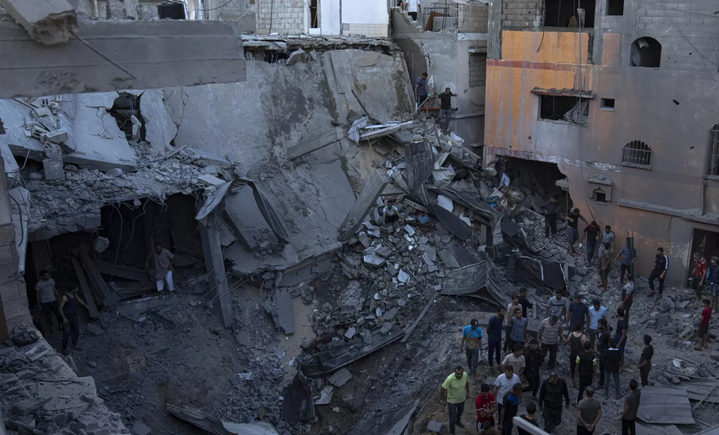
Today, the global conscience trembles at the catastrophe unfolding in Gaza, where Palestinians—overwhelmingly civilians—have endured unprecedented devastation. Entire neighborhoods were leveled; hospitals, universities, places of worship, and civilian shelters have been struck repeatedly; and countless families have been wiped out.
Independent observers, human rights organizations, UN agencies, and international legal experts have warned that the scale and pattern of violence may amount to genocide or genocidal acts. The siege-like conditions—marked by destruction of basic infrastructure, obstruction of humanitarian aid, mass displacement, and widespread starvation—echo elements outlined in the Genocide Convention’s definition of “conditions of life calculated to bring about physical destruction.”
These are not simply political debates—they are issues of international law and human dignity.
The Responsibility of the United Nations
The UN was created in part to prevent the horrors of the Second World War from ever returning. The Genocide Convention itself is a product of that determination. And yet, the limits of the UN’s enforcement capabilities remain painful to observe.
Still, the UN plays three critical roles:
1. Early Warning and Monitoring
The Office of the UN Special Adviser on the Prevention of Genocide collects information on risk factors—hate speech, targeting of communities, discriminatory laws, mass displacement, systematic destruction of civilian infrastructure. In Gaza, the Special Adviser has issued multiple warnings, highlighting the growing danger of mass atrocity crimes.
2. Mobilizing Diplomatic Action
Through resolutions, emergency sessions, and advocacy, the UN seeks to halt violence and mobilize humanitarian access.
3. Documenting Violations and Preserving Evidence
UN bodies act as custodians of truth. Their reports ensure that the world cannot later claim ignorance.
But the UN cannot act decisively without the political will of its member states. Silence or paralysis in the face of mass suffering risks normalizing impunity and weakening the entire architecture of international law.
The Role of the International Court of Justice (ICJ) and International Criminal Court (ICC)
When state-level mechanisms fail or are unwilling to act, global justice institutions become indispensable.
ICJ: Addressing State Responsibility
Several countries have already turned to the ICJ to hold Israel accountable for alleged genocidal acts in Gaza. The Court’s provisional measures—calling for the prevention of genocidal acts and the facilitation of humanitarian aid—underline the seriousness with which the allegations are viewed at the highest judicial level.
ICC: Investigating Individual Responsibility
The ICC’s mandate allows it to prosecute individuals responsible for war crimes, crimes against humanity, and genocide. If commanders or political leaders are found to have intentionally orchestrated or facilitated atrocities, they may face prosecution—regardless of their rank or nationality.
These institutions exist precisely for moments like this. Justice must not be selective. Pardoning war criminals only encourages others to commit new atrocities in the expectation of future pardon. Accountability is not vengeance—it is deterrence. It is protection for future generations.
Why Prevention Still Fails
The UN Framework of Analysis for Atrocity Crimes highlights common risk factors:
– systemic discrimination,
– dehumanization,
– propaganda,
– impunity,
– forced displacement,
– destruction of cultural and social life.
All of these have been observed historically—from Bosnia to Rwanda—and many are tragically visible again today in Gaza.
The world knows the patterns. What is often missing is political courage.
Marking the Day: Learning from the Past to Safeguard the Future
International Days exist not merely for ceremonies, but for awakening conscience. The International Day of Commemoration and Dignity of Genocide Victims aims to mobilize political will and public resolve. It reminds states of their obligations—not only to mourn, but to act.
Each year, survivors from past genocides remind us that the past is not distant. Their stories mirror today’s suffering. Their grief echoes in the voices of mothers searching for their children under rubble, in families fleeing bombardment, in communities living under siege.
The objects preserved from past genocides—a child’s dress from the Holocaust, a prayer book from Srebrenica, a photograph saved from Rwanda—symbolize lives interrupted and hope extinguished. Each artifact cries out a single message: If we fail to act, history repeats itself.
Gaza’s devastation stands today as the world’s most urgent test of its pledge to prevent genocide.
Muslims: Too Often the Victims, Rarely the Perpetrators
It is impossible to ignore a recurring historical pattern: Muslim populations—whether in Palestine, Bosnia, Myanmar, China’s Xinjiang region, or India-administered Kashmir—have repeatedly been at the receiving end of mass violence, forced displacement, and discrimination. They are societies built on family, compassion, and community, seeking dignity and peace. Yet they have often endured some of humanity’s darkest atrocities.
Their resilience reflects a commitment to patience and coexistence, despite immense suffering. Their experiences must serve as a universal reminder that hatred begins with dehumanization and ends with mass violence.
The Moral and Legal Imperative Before Us
Seventy-seven years after the Genocide Convention, the world must accept an uncomfortable truth: genocide remains a real and present danger. The victims are not numbers; they are children, parents, teachers, students—people whose dreams mattered.
If the world allows impunity to continue, if it treats genocide accusations as political inconvenience rather than moral emergency, then the promise of “Never Again” will continue to ring hollow.
Every war criminal must be held accountable.
Not out of anger—but out of a duty to humanity.
Every state has an obligation to prevent genocide.
Not selectively—but universally.
Every nation must speak when the vulnerable cry for help.
Not tomorrow—but today.
The International Day of Genocide Prevention is not a day of abstract reflection—it is a call to action. A call to protect life, uphold human dignity, and ensure that the suffering unfolding before our eyes does not become another chapter in humanity’s long list of preventable tragedies.
The world failed too many times in the past.
It must not fail Gaza.
(ASIA PACIFIC DAILY)