Author: Prof. Engr. Zamir Ahmed Awan, Founding Chair GSRRA, Sinologist, Diplomat, Editor, Analyst, Advisor, Consultant, Researcher at Global South Economic and Trade Cooperation Research Center, and Non-Resident Fellow of CCG. (E-mail: awanzamir@yahoo.com).
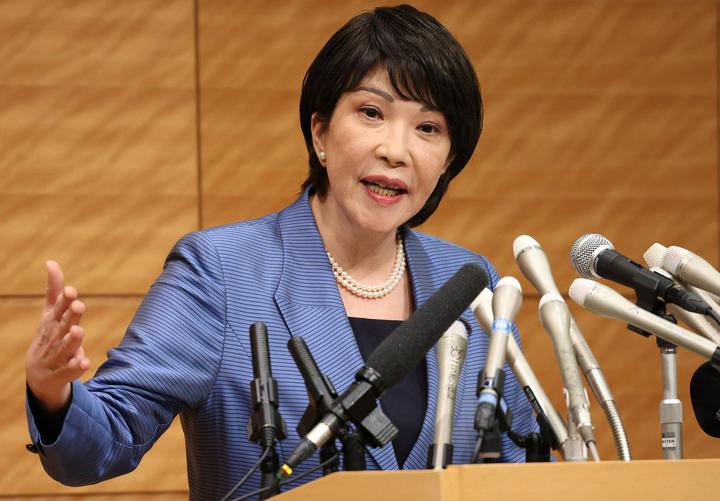
In recent weeks, remarks by Japanese Prime Minister Sanae Takaichi have ignited a political firestorm across China and unsettled the wider Asian region. By attempting to link the Taiwan question with Japan’s “collective self-defense” framework—already a deeply controversial reinterpretation of Japan’s pacifist Constitution—Takaichi has crossed a red line that China has repeatedly warned must never be breached. Her comments, suggesting that a hypothetical Chinese “use of force” regarding Taiwan could constitute a “survival-threatening situation” for Japan, have been widely interpreted as a signal that Tokyo may consider direct military involvement in the Taiwan Strait.
This rhetoric is not only provocative—it is profoundly destabilizing. It disregards historical truths, distorts legal definitions, and ignores the sensitivities of 1.4 billion Chinese people for whom the Taiwan question is a matter of national dignity and territorial integrity. It is therefore unsurprising that Beijing’s response has been swift, firm, and resolute. China’s Ministry of Foreign Affairs has issued repeated warnings. Senior Chinese officials summoned Japan’s ambassador for official démarches. The People’s Liberation Army Daily published a front-page commentary condemning Japan’s “militaristic ambitions.” And the Ministry of Culture and Tourism advised Chinese citizens to avoid travel to Japan, citing deteriorating sentiment and potential safety risks.
The regional concern is real. Takaichi’s statements are not a trivial political misstep; they represent a dangerous attempt to drag Japan further down the path of militarization and to inject external interference into China’s internal affairs. For China, Taiwan is the most sensitive of all national issues—the declared red line that no foreign force is allowed to cross.
China has always been clear: Taiwan is an inalienable part of Chinese territory. This is not merely Beijing’s position—it is the consensus embodied in the one-China principle, acknowledged by the United Nations and followed by 183 countries worldwide. Japan itself formally recognized this principle in 1972 when diplomatic ties were normalized. Japan affirmed again in multiple political documents that Taiwan is a part of China and pledged not to support any separatist activities.
Takaichi’s comments directly violate these commitments.
China’s Patience, Restraint, and the Pursuit of Peaceful Reunification
For decades, China has adhered to a policy of peaceful reunification, demonstrating patience and restraint even as separatist forces in Taiwan have grown more vocal. Beijing has consistently emphasized dialogue, negotiations, and peaceful development across the Strait. Despite having both the capacity and capability to take decisive measures, China has deliberately chosen a path of prudence.
China’s commitment to peaceful reunification is not a sign of weakness—it is a sign of strategic maturity and responsibility. China understands that peaceful integration is the most beneficial outcome for the people on both sides of the Strait and for the stability of Asia. Only when blatantly provoked, threatened, or challenged does China reiterate that it will never renounce the option of using necessary measures to safeguard sovereignty.
Japan’s attempt to insert itself into this delicate matter is unnecessary, unwelcome, and unwise.
Japan’s Inappropriate Interference and Historical Context
Japan’s posture today cannot be separated from its historical legacy. For much of the first half of the 20th century, Japan’s militarism caused immense suffering across Asia. China, Korea, Southeast Asia, and many other regions endured brutal occupation, forced labor, destruction, and war. Taiwan itself was subjected to 50 years of harsh colonial rule—from 1895 to 1945—marked by cultural suppression, land exploitation, and countless atrocities.
Even today, many Chinese families carry the painful memories of Japanese aggression. Historical wounds may have healed, but they are not forgotten. This is why Japanese leaders are expected to act with extreme caution, humility, and restraint when commenting on issues such as Taiwan. Instead, Prime Minister Takaichi has chosen to revive historical anxieties by adopting a posture that resembles, in the eyes of many Chinese observers, a revival of Japan’s militaristic impulses.
Her reference to a “survival-threatening situation” is especially alarming. During the 20th century, similar language was used by Japanese militarists to justify foreign invasions under the claim of protecting national interests. China cannot and will not tolerate a repeat of such narratives.
Controversy Within Japan
Takaichi’s remarks have not only angered China—they have sparked concern within Japan itself. Many Japanese citizens, peace groups, scholars, and civil society organizations view her stance with deep skepticism. In Okinawa, which hosts the bulk of American military bases in Japan and where memories of war are particularly vivid, local groups recently gathered to oppose the government’s accelerating militarization. They fear that Okinawa and the southwestern islands could once again become frontline targets in a conflict provoked by reckless political rhetoric.
Even among Japan’s conservative circles, there are voices warning that Takaichi’s approach could trap Japan in dangerous confrontation. The United States—Japan’s closest security ally—has been cautious to avoid unnecessarily provoking China. Yet Japan appears to be taking steps that may drag others into confrontation or escalation.
For many Japanese observers, the prime minister’s comments do not enhance security—they increase risk.
Chinese Public Opinion: Widespread Anger and Condemnation
What makes the current situation particularly serious is the strong public reaction across China. The Taiwan question is not an issue of political convenience or diplomatic flexibility—it lies at the heart of Chinese national identity. People from all walks of life—academics, workers, students, veterans, and ordinary families—feel deeply offended by Takaichi’s insinuations that Japan could intervene militarily in what is indisputably China’s internal affair.
Across Chinese media platforms, netizens have expressed anger, frustration, and condemnation. Some have warned that Japan is playing with fire. Others have reminded Takaichi that the era of a militarily dominant Japan is long gone, and China’s determination to defend its sovereignty is unshakable. Voices are rising across Chinese society demanding that Japan immediately withdraw its provocative remarks.
This public sentiment cannot be dismissed. It shapes the broader national response and influences how China calibrates its diplomatic and security posture toward Japan.
China’s Diplomatic Actions Send a Clear Message
Beijing’s actions in recent days demonstrate that this issue is not being treated lightly.
Vice Foreign Minister Sun Weidong summoned Japan’s ambassador for serious démarches, warning of dire consequences if Japan does not correct its course.
Foreign ministry spokespersons have repeatedly urged Japan to withdraw its erroneous remarks and adhere to the one-China principle.
The People’s Liberation Army Daily issued some of its strongest warnings in years, stating that any foreign interference in the Taiwan question will be met with crushing defeat.
The Ministry of Culture and Tourism issued travel advisories cautioning Chinese citizens to avoid Japan due to worsening sentiment and risks.
China's State Council Taiwan Affairs Office explicitly condemned Japan’s colonial history and criticized Takaichi’s remarks as a continuation of unacceptable interference.
Taken together, these actions highlight the seriousness with which China views the situation.
Japan Must Choose Responsibility Over Recklessness
The path forward is clear. Japan must immediately correct its course to prevent further deterioration in China-Japan relations. Prime Minister Takaichi should retract her inflammatory remarks, reaffirm Japan’s commitments to the political documents signed with China, and respect the one-China principle without ambiguity. An apology would help restore trust and prevent escalating tensions.
Japan cannot afford to allow a single political leader’s rhetoric to jeopardize decades of peace, economic cooperation, and mutual benefit. China remains Japan’s largest trading partner and a key economic partner. Stable relations serve the interests of the people of both countries.
Tokyo must recognize that the Taiwan question is China’s internal affair—and any attempt to internationalize or militarize it will be met with firm and decisive opposition from 1.4 billion Chinese citizens and the Chinese state.
A Moment for Diplomacy, Not Adventurism
At this sensitive moment in Asian geopolitics, restraint is not a weakness—it is wisdom. Stability is not guaranteed—it must be preserved. And peace is not automatic—it must be protected through mutual respect and responsible leadership.
China has long pursued peaceful reunification with Taiwan and consistently advocated dialogue over confrontation. But China’s goodwill should not be misinterpreted as tolerating foreign interference. The red line on Taiwan is clear, firm, and irreversible.
Japan now stands at a crossroads. It can choose diplomacy, adherence to international commitments, and respect for history—or it can choose to provoke, destabilize, and repeat past mistakes. The latter path will bring consequences that Japan is neither prepared for nor capable of managing.
For the sake of Asia’s peace and the future of China-Japan relations, Tokyo must take the responsible path. The world is watching, and so are 1.4 billion Chinese citizens whose patience must never be mistaken for indifference.
(ASIA PACIFIC DAILY)