Author: Prof. Engr. Zamir Ahmed Awan, Founding Chair GSRRA, Sinologist, Diplomat, Editor, Analyst, Advisor, Consultant, Researcher at Global South Economic and Trade Cooperation Research Center, and Non-Resident Fellow of CCG. (E-mail: awanzamir@yahoo.com).
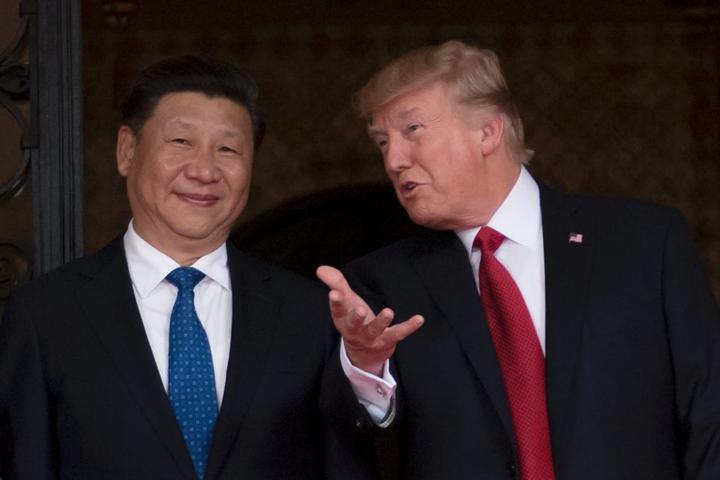
The global economy watched with cautious optimism as Chinese President Xi Jinping and U.S. President Donald Trump met in Busan, Republic of Korea, on October 30. For years, the world’s two largest economies have been entangled in a cycle of trade tensions, tariff battles, and geopolitical mistrust. Yet, their meeting in Korea seems to have reignited a long-lost spirit of dialogue and pragmatism. The atmosphere that followed — from the joint announcement of new trade initiatives to reciprocal goodwill gestures — suggests that the ice between Beijing and Washington may finally be starting to melt.
This renewed engagement is not merely symbolic. It carries deep implications for global trade stability, agricultural cooperation, technological exchange, and investor confidence. Both sides appear to be making deliberate, measured moves toward a more predictable and mutually beneficial relationship. In a world fatigued by economic uncertainty, this development offers a breath of hope.
A Meeting That Changed the Tone
The Xi-Trump meeting was not just another diplomatic encounter. It represented a turning point in the post-pandemic global order, where two major powers recognized the high cost of confrontation and the benefits of collaboration. According to official statements, the meeting focused primarily on trade and economic relations, but also touched upon strategic stability, climate cooperation, and mutual respect for sovereignty.
Observers noted that both leaders appeared determined to reset the tone of bilateral engagement. President Xi emphasized that “cooperation is the only correct choice,” while President Trump echoed that “constructive engagement benefits both nations and the world.” Their statements, though diplomatic, reflected an undercurrent of realism — an acknowledgment that the global economy cannot afford another cycle of trade wars and tariff escalations.
The outcome was immediate and concrete. Within days, the two sides began translating diplomatic gestures into actionable policy.
China’s Measures: A Gesture of Goodwill
On November 5, the Chinese Ministry of Commerce (MOFCOM) announced a series of significant trade policy adjustments aimed at easing tensions and rebuilding trust. Among the most notable moves:
Lifting export controls on 15 U.S. entities — a clear signal that China seeks to restore commercial and technological exchange with American companies. These include firms involved in semiconductors, energy, and biotechnology — sectors that have long been at the heart of bilateral friction.
Suspending curbs on another 16 U.S. entities for one year — giving room for dialogue, compliance reviews, and confidence-building measures.
Maintaining the suspension of the additional 24% tariff on certain U.S. imports for another year, effective November 10. This measure aims to stabilize the pricing environment for key imports, such as agricultural and high-tech goods, while providing relief to Chinese manufacturers reliant on U.S. components.
These steps demonstrate Beijing’s intent to signal goodwill without compromising its economic sovereignty. The decision to lift or suspend export restrictions is not unconditional — it reflects China’s desire to test whether Washington will reciprocate in good faith.
Li Chenggang, China’s International Trade Representative and Vice Minister of Commerce, reinforced this sentiment when he met a U.S. agricultural delegation in Beijing on November 4. During the meeting, he urged for “mutual respect and practical cooperation,” particularly in agriculture — a sector often regarded as the backbone of U.S. exports and a critical bridge in bilateral relations.
Washington’s Response: A New Economic Understanding
Just days after the Busan meeting, President Trump announced on November 1 a “new trade and economic deal” with China. Though details remain under negotiation, the announcement signaled a willingness to move beyond punitive measures and seek mutually advantageous outcomes.
In the spirit of this renewed engagement, the U.S. has shown readiness to enhance agricultural exports to China, resume select technological cooperation, and explore joint ventures in green energy and digital infrastructure. American trade officials have also hinted at the potential revival of mechanisms akin to the “Phase One” agreement — but this time with a broader, more balanced focus.
While Washington continues to express concern over intellectual property and market access, the current tone is more pragmatic than confrontational. A senior U.S. official reportedly remarked that “both sides understand the value of economic stability, especially at a time when global inflation, energy costs, and supply chain disruptions remain high.”
The United States’ agricultural sector has particularly welcomed these developments. For American farmers who had faced reduced exports and mounting uncertainties over the past years, China’s decision to resume large-scale agricultural imports represents a much-needed boost. It is no coincidence that the first post-meeting bilateral engagement took place between Chinese trade officials and a U.S. agricultural delegation.
Bridging the Divide: Agriculture as a Foundation
Agriculture has historically been the cornerstone of U.S.-China trade cooperation. From soybeans to corn and wheat, American farmers have relied heavily on Chinese demand, while China has benefited from reliable and high-quality food imports. The Xi-Trump meeting rekindled this relationship, symbolizing that even in an era of high technology and strategic competition, basic economic interdependence can serve as a bridge for peace.
Li Chenggang’s dialogue with U.S. agricultural representatives highlighted this mutual dependency. “Agriculture is not just trade,” he noted, “it is about the well-being of people in both countries.” Such remarks reflect a human-centered approach to trade — an understanding that economic engagement ultimately benefits households, not just balance sheets.
If both nations can build trust through the agricultural sector, it may pave the way for cooperation in more sensitive areas, such as green technology, digital trade, and renewable energy.
The Significance of Timing
The timing of this rapprochement cannot be overstated. The global economy is facing an era of transition — from geopolitical realignments to technological shifts and climate pressures. China’s domestic economic recovery is gaining pace after years of pandemic disruptions, while the U.S. is preparing for a new political cycle under President Trump’s second administration.
In such a setting, neither nation can afford to prolong economic decoupling. Global investors, manufacturers, and emerging economies all look toward Beijing and Washington for signals of stability. The latest gestures, therefore, are not just about bilateral relations; they are about restoring confidence in the global trading system.
Moreover, this easing of tensions aligns with the broader objectives of multilateralism — as both sides have reiterated their support for the World Trade Organization (WTO) and the need for fair, transparent trade practices.
Challenges Ahead: Building on Good Faith
Of course, challenges remain. Decades of strategic rivalry, mutual suspicion, and divergent political systems cannot be reconciled overnight. The key lies in consistent, verifiable, and transparent implementation of the new trade measures.
For China, the test will be to sustain openness while protecting its national interests and industrial goals. For the U.S., the challenge will be to balance domestic political pressures with the long-term benefits of cooperation.
The real test, however, will be whether both sides can maintain good faith — a phrase repeatedly emphasized by Chinese media outlets like CGTN, which noted that “good faith is needed to implement the historic phase one trade deal.” This principle applies equally to any future trade arrangement.
If both nations act in good faith — prioritizing practical outcomes over political posturing — the world could witness not just the stabilization of U.S.-China relations, but the reemergence of responsible global leadership from both capitals.
A Positive Outlook: From Competition to Coexistence
The Busan meeting has, at the very least, reintroduced dialogue and mutual respect into the U.S.-China equation. It has set the stage for a transition from confrontation to coexistence — a dynamic where competition exists but is tempered by cooperation.
The world stands to benefit immensely if both sides follow through on their commitments. Stabilized trade means greater global growth, reduced inflationary pressures, and renewed confidence in international markets.
For China, deeper economic ties with the U.S. can help sustain technological innovation and export diversification. For the U.S., access to the vast Chinese market can revitalize its industrial and agricultural base, creating jobs and opportunities at home.
In the words of a Chinese proverb: “When two tigers fight, both are wounded; when they share the mountain, both thrive.” The recent Xi-Trump engagement suggests that both leaders have begun to recognize the wisdom of sharing rather than clashing.
A New Chapter in Economic Diplomacy
The Busan meeting marked more than a diplomatic thaw — it symbolized a new phase of maturity in global leadership. Both China and the United States have realized that in today’s interconnected world, the prosperity of one depends on the stability of the other.
With the recent easing of export controls, suspension of tariffs, and the revival of agricultural dialogue, both sides have taken genuine steps toward rebuilding trust. The path ahead may not be free of obstacles, but the direction is right.
In an age where division too often dominates the headlines, the Xi-Trump meeting offers a rare reminder that diplomacy, patience, and economic cooperation remain humanity’s best tools for peace and progress. The world now watches with hope — that the spirit of Busan may mark the beginning of a new, stable, and prosperous era in China-U.S. relations.
(ASIA PACIFIC DAILY)