Author: Prof. Engr. Zamir Ahmed Awan, Founding Chair GSRRA, Sinologist, Diplomat, Editor, Analyst, Advisor, Consultant, Researcher at Global South Economic and Trade Cooperation Research Center, and Non-Resident Fellow of CCG. (E-mail: awanzamir@yahoo.com).
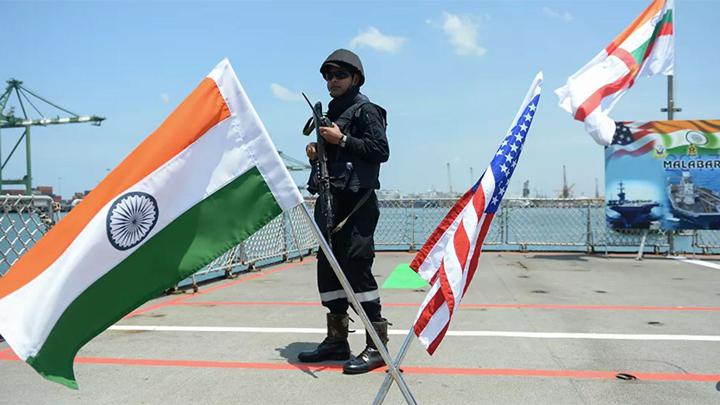
The recently signed 10-year defense framework agreement between the United States and India has raised deep concerns across Asia and beyond. Marketed as a partnership for peace and stability, the deal, in reality, risks upending South Asia’s fragile strategic balance, threatening regional harmony, and accelerating the militarization of the Indo-Pacific.
India’s growing strategic alignment with the United States—under the guise of “defense modernization” and “shared democratic values”—represents a calculated attempt to dominate South Asia militarily and politically. The framework, though presented as a bilateral cooperation document, is effectively a blueprint for regional confrontation, particularly against Pakistan and China.
Key Provisions: A Strategic Mask for Military Ambitions
At its core, the new U.S.–India defense framework aims to institutionalize and deepen military collaboration over the next decade. Key provisions include:
Joint Research and Technology Transfer:
The pact emphasizes co-production and co-development of advanced weapons, aerospace systems, and cyber-warfare tools. By granting India access to dual-use technologies, Washington has effectively enabled New Delhi to accelerate its arms buildup—tilting the military balance of South Asia.
Expanded Operational Access:
The agreement consolidates earlier accords (LEMOA, COMCASA, BECA) that allow reciprocal use of military bases, intelligence sharing, and logistics support. This means U.S. forces can now operate freely from Indian facilities, giving India a forward-operating advantage and a sense of impunity in the region.
Maritime and Indo-Pacific Militarization:
India will play a more prominent role in Washington’s so-called “Indo-Pacific Strategy.” This translates into a military containment policy against China and an attempt to encircle Pakistan through naval and surveillance networks.
Space and Cyber Collaboration:
The inclusion of space security, satellite monitoring, and cyber warfare indicates an alarming militarization of outer space and digital domains—fields that should ideally remain dedicated to peaceful cooperation.
India’s Strategic Intent: Dominance, Not Peace
Behind India’s loud claims of being a “responsible power” lies an undeniable record of regional aggression. Its track record includes repeated violations along the Line of Control, human rights abuses in Indian-Occupied Jammu & Kashmir, destabilizing actions in neighboring countries, and a refusal to engage in peaceful dialogue.
The new defense pact emboldens this mindset. It grants India the tools and confidence to pursue hegemonic ambitions under U.S. patronage. New Delhi’s military adventurism—whether through false-flag operations, border provocations, or coercive diplomacy—is now backed by advanced U.S. technology and intelligence.
This poses a direct threat to Pakistan’s sovereignty and undermines regional peace efforts. Pakistan has consistently advocated for dialogue and mutual respect, yet India continues to prioritize militarization over negotiation. The defense framework effectively rewards this behavior, reinforcing the perception that aggression yields strategic dividends.
A Blow to Regional Stability
South Asia’s security equilibrium has historically depended on mutual deterrence and strategic restraint. The U.S.–India defense partnership risks shattering this balance. By empowering India militarily, Washington has inadvertently pushed the region toward instability.
Erosion of Strategic Deterrence:
India’s enhanced capabilities in surveillance, missile systems, and air defense could undermine Pakistan’s deterrent posture, compelling Islamabad to upgrade its defense preparedness. Such dynamics risk triggering a dangerous arms race with unpredictable consequences.
Undermining Peace Initiatives:
Every major peace initiative in South Asia—from Lahore to Agra—has been derailed by India’s militaristic posture. This new pact further sidelines dialogue by making India less inclined to compromise.
Rising Risk of Border Escalations:
India’s increasing sense of military superiority could translate into miscalculation along the LoC or the working boundary. Any escalation, even unintended, could have catastrophic consequences in a nuclearized environment.
Marginalization of Regional Forums:
The deal undermines multilateral platforms such as SAARC and SCO that aim to promote cooperation rather than confrontation. India’s pivot toward Western alliances distances it from regional consensus on peace and development.
Implications for China and the Indo-Pacific
The framework is clearly aimed at containing China’s peaceful rise and disrupting the Belt and Road Initiative, particularly the China-Pakistan Economic Corridor (CPEC). Under the pretext of maritime security, the U.S. is using India as a proxy to militarize the Indian Ocean, thereby threatening trade routes and regional connectivity.
China has responded cautiously, emphasizing dialogue and shared prosperity. However, Beijing is likely to enhance strategic coordination with Pakistan to ensure a counter-balancing mechanism against this alliance. Strengthening CPEC and deepening cooperation in technology, energy, and defense between China and Pakistan could restore equilibrium in the region.
The so-called Indo-Pacific “security architecture” is, therefore, not about freedom of navigation—it is about freedom to militarize. Such policies only heighten the risk of confrontation between major powers in a region that desperately needs stability and development.
Global Repercussions: Militarization over Multilateralism
The consequences of this defense framework are not confined to South Asia. It signals a return to Cold War-style bloc politics, where power projection and military alliances replace diplomacy and cooperation.
For the developing world, this trend is deeply concerning. As the United States pours billions into arms transfers and defense partnerships, global priorities such as poverty reduction, food security, and climate change are sidelined.
The agreement also erodes the credibility of international institutions like the United Nations, which were founded on principles of collective security and peaceful dispute resolution. When major powers themselves indulge in militarized politics, they set a precedent that smaller nations may eventually emulate.
Furthermore, this defense pact adds fuel to global arms proliferation. By legitimizing militarization under the banner of “strategic partnership,” it weakens global disarmament norms and undermines efforts for nuclear risk reduction.
Pakistan’s Perspective: Responsible, Peace-Oriented, and Resilient
Unlike India’s expansionist designs, Pakistan has consistently upheld the principles of peaceful coexistence, sovereignty, and dialogue. Islamabad has repeatedly proposed bilateral engagement, cross-border trade, and confidence-building measures—only to face rejection and hostility from New Delhi.
Pakistan’s nuclear and defense capabilities remain deterrent-based, not aggressive. They exist solely to safeguard national sovereignty and maintain regional balance. The country’s policy of “strategic restraint with readiness” has long ensured peace in South Asia, even in the face of provocation.
However, the U.S.–India pact now challenges this equilibrium. To respond effectively, Pakistan should:
Strengthen Ties with China, Russia, and the Islamic World:
Deepen defense and economic cooperation with trusted partners who support peace and multipolarity. Joint exercises, technology exchanges, and coordinated diplomacy can reinforce regional balance.
Bolster Strategic Deterrence:
Continue investing in indigenous defense production, missile technology, and cyber resilience to ensure credible deterrence against aggression.
Promote Economic and Diplomatic Engagement:
Use platforms such as the Shanghai Cooperation Organization (SCO), OIC, and UN forums to highlight India’s destabilizing actions and present Pakistan’s peace-centric stance.
Champion Peaceful Development through CPEC:
Pakistan and China can jointly present CPEC as a symbol of economic peace and connectivity—contrasting sharply with India’s militaristic agenda.
India’s Record: A Disturber, not a Stabilizer
India’s behavior over recent years speaks louder than its rhetoric of democracy and peace. From revoking the special status of Jammu & Kashmir in violation of UN resolutions, to sponsoring proxy activities in neighboring countries, India has repeatedly acted as a spoiler to peace.
Its role in promoting disinformation campaigns against Pakistan and China, its internal repression of minorities, and its militarization of domestic politics further expose the contradictions of its so-called democratic values.
The U.S.–India defense pact thus effectively legitimizes a regime that thrives on militarism and intolerance—undermining Washington’s own stated commitment to human rights and global peace.
Toward a Dangerous Future
The 10-year defense framework between India and the United States is not a step toward peace—it is a step toward confrontation. It threatens to ignite arms races, deepen mistrust, and polarize the region along dangerous fault lines.
True peace in South Asia cannot be achieved through weapons, alliances, or intimidation. It can only be secured through dialogue, respect for sovereignty, and equitable development. India’s current trajectory, however, points in the opposite direction.
Pakistan, for its part, will continue to pursue stability, strengthen deterrence, and advocate for cooperation over confrontation. The international community must also recognize that supporting militarized partnerships at the expense of diplomacy risks not just regional, but global instability.
The Illusion of Partnership, the Reality of Peril
The U.S.–India defense framework may appear as a strategic triumph for both nations, but beneath the surface lies a dangerous reality—a militarized alliance that jeopardizes peace from South Asia to the wider Indo-Pacific.
By empowering an expansionist India, Washington risks destabilizing an entire region, pushing it closer to the brink of perpetual insecurity. The world cannot afford another era of Cold War confrontations and proxy rivalries.
For lasting peace, nations must return to the principles of diplomacy, equality, and non-interference. Until that happens, the U.S.–India defense pact will remain a symbol of misplaced priorities—a deal that trades peace for power and stability for suspicion.
(ASIA PACIFIC DAILY)