Author: Prof. Engr. Zamir Ahmed Awan, Founding Chair GSRRA, Sinologist, Diplomat, Editor, Analyst, Advisor, Consultant, Researcher at Global South Economic and Trade Cooperation Research Center, and Non-Resident Fellow of CCG. (E-mail: awanzamir@yahoo.com).
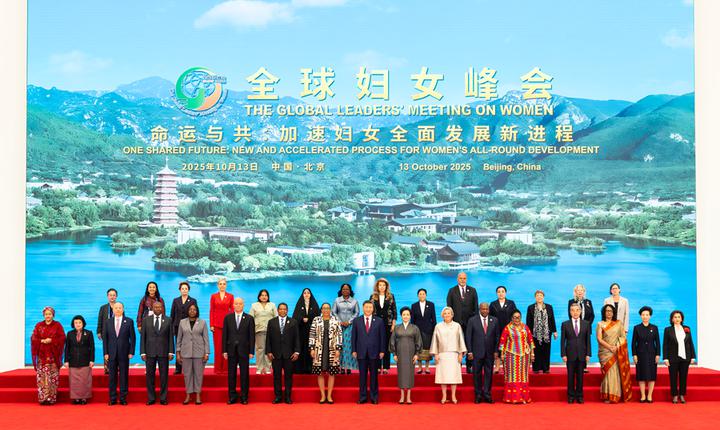
The recently held Global Leaders’ Meeting on Women 2025 in Beijing, addressed by President Xi Jinping, marked a defining moment in China’s journey of women’s empowerment. The event, coinciding with the 30th anniversary of the 1995 Fourth World Conference on Women, reaffirmed China’s unwavering commitment to gender equality, shared development, and global cooperation.
In his keynote address, President Xi underlined that “women truly hold up half the sky” in China’s modernization and global progress. He emphasized that women’s development is not only about personal empowerment but also about family harmony, social stability, and national prosperity. His message carried both pride in the achievements of Chinese women and a vision for their even greater role in shaping the future.
From Tradition to Transformation
Historically, Chinese society was deeply influenced by Confucian traditions that emphasized the virtues of women as “good wives and wise mothers.” Women’s roles were largely confined to domestic responsibilities and filial duties, with limited access to education or participation in public life.
Yet, change was always stirring beneath the surface. From the progressive customs of some ethnic groups to the reformist movements of the late Qing and Republican eras, the foundations of gender equality were slowly being laid.
The establishment of the People’s Republic of China in 1949 brought a decisive transformation. Chairman Mao Zedong’s famous declaration that “women hold up half the sky” was not mere rhetoric—it became a national commitment. Women entered the workforce, contributed to agricultural and industrial production, and participated in the building of a new socialist society.
With the reform and opening-up policy in the late 1970s, opportunities for women multiplied. Access to education, professional training, and employment broadened dramatically. Women became visible in all sectors—academia, politics, entrepreneurship, and science—marking the beginning of a modern era of empowerment.
Modern China: Women Leading the Way
In today’s China, women are central to national development and social progress. According to official statistics, women now make up over 43% of the national workforce, more than half of all internet start-up founders, and a majority of China’s Olympic medalists in recent years. These figures reflect the country’s emphasis on inclusivity and opportunity.
China’s Outline of Women’s Development (2021–2030) sets concrete goals for improving women’s participation in economic, political, cultural, and social life. It emphasizes access to quality education, protection of women’s rights in the workplace, and promotion of female leadership in decision-making roles.
In enterprises nationwide, women now account for 37.7% of board members, 41.9% of supervisory boards, and 34.2% of workers’ congress representatives—showing remarkable progress since 2012. Women’s representation in the judiciary has also increased, with 42.3% of judges, 43.8% of prosecutors, and over half of all jurors being women.
President Xi’s Vision for Women’s Development
President Xi’s leadership has played a pivotal role in advancing women’s empowerment as a national and global priority. At the Beijing meeting, he proposed four key initiatives to accelerate women’s all-round development:
Creating an enabling environment for women’s growth through better education, healthcare, and social services.
Strengthening momentum for high-quality development, ensuring women’s equal participation in the digital, green, and innovation-driven economy.
Improving governance systems to better protect women’s rights and opportunities.
Fostering global cooperation for women’s empowerment through international partnerships and South-South collaboration.
President Xi also announced a set of landmark initiatives:
US$10 million in new contributions to UN Women;
US$100 million from China’s South-South Cooperation Fund for women’s and girls’ development projects;
1,000 “small and beautiful” livelihood programs benefiting women and families;
Training and exchange programs for 50,000 women over the next five years; and
The establishment of a Global Center for Women’s Capacity Building in China.
These commitments demonstrate China’s readiness to turn ideals into practical actions—both at home and abroad.
Women’s Contributions to China’s Modernization
Chinese women are now active participants and innovators across all sectors. In the digital economy, women have emerged as tech entrepreneurs and online business leaders. In rural revitalization, they are helping transform agriculture through e-commerce and cooperative leadership. In science and technology, female researchers are breaking new ground in fields ranging from AI to environmental science.
Culturally, women are also leading creators in media, arts, and literature. By 2023, over 456,000 women were employed in media industries, making up 43% of that sector’s workforce. In community development, women play vital roles in grassroots governance, volunteer work, and family support programs—strengthening the social fabric of modern China.
These contributions illustrate that women are not merely beneficiaries of development—they are co-creators of China’s national rejuvenation.
The Chinese Model: Equality, Harmony, and Progress
China’s approach to women’s empowerment combines equality with harmony, aligning gender advancement with family and social well-being. This model is distinctively Chinese: it does not seek confrontation between genders but promotes balance, mutual respect, and collective progress.
The government’s continued investment in education, healthcare, maternal support, and workplace rights ensures that women can thrive while balancing professional and personal aspirations. This holistic model has strengthened families, communities, and the nation at large.
China’s success story also carries global relevance. Through its international cooperation programs, training initiatives, and multilateral platforms, China has positioned itself as a partner and contributor to the global women’s movement, sharing its experience with developing nations and advancing a more inclusive international order.
A Coherent and Hopeful Future
Looking ahead, the trajectory is clear. Chinese women are expected to play an even greater role in the nation’s goals of modernization, innovation, and global cooperation. The leadership of President Xi Jinping provides the policy direction and moral encouragement necessary to sustain this progress.
His statement that “the happiness of families, the harmony of society, and the progress of the nation all depend on the development of women” encapsulates China’s vision. It is a call not only to continue empowering women but to recognize their indispensable role in shaping the country’s destiny.
Holding Up Half the Sky—and More
The evolution of women’s status in China—from the traditions of the past to the dynamism of the present—stands as one of the great success stories of the modern era. Empowered by policy, inspired by leadership, and motivated by a collective spirit, Chinese women are advancing confidently on all fronts.
Today, they are scientists, entrepreneurs, artists, judges, and diplomats. They are community builders, innovators, and peace advocates. In every sphere of national life, women are demonstrating talent, integrity, and leadership.
As President Xi Jinping’s vision continues to guide China’s path, the progress of women remains a vital part of the country’s comprehensive modernization. Indeed, in this new era, Chinese women are not only holding up half the sky—they are helping to build a brighter, more harmonious, and more prosperous future for all.
(ASIA PACIFIC DAILY)