Author: Prof. Engr. Zamir Ahmed Awan, Founding Chair GSRRA, Sinologist, Diplomat, Editor, Analyst, Advisor, Consultant, Researcher at Global South Economic and Trade Cooperation Research Center, and Non-Resident Fellow of CCG. (E-mail: awanzamir@yahoo.com).
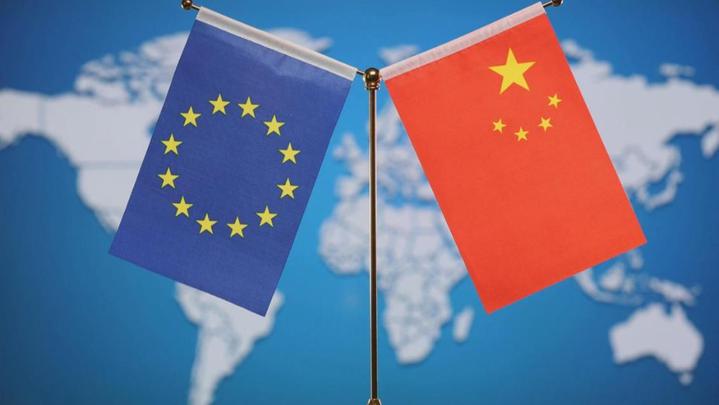
The upcoming 25th EU-China Summit, scheduled to take place on July 24, 2025, in Beijing, marks a critical juncture in the evolving dynamics of international relations and global economic governance. At the invitation of the Chinese leadership, European Council President Antonio Costa and European Commission President Ursula von der Leyen will visit China to co-chair the summit alongside Chinese Premier Li Qiang. Chinese President Xi Jinping is also expected to meet with the EU leaders. This high-level engagement reflects the mutual desire to stabilize, deepen, and recalibrate one of the most consequential partnerships in today’s multipolar world.
The timing of this summit is crucial. Global geopolitics is undergoing rapid transformation, driven by major shifts in U.S. foreign policy under President Donald Trump’s renewed administration, rising protectionist trends, and the lingering fallout from the Ukraine conflict. At such a time, the EU-China dialogue carries the hopes of billions for an alternative model of cooperation—one based on mutual respect, peaceful coexistence, and economic synergy.
A Strained Transatlantic Relationship
A key context shaping this summit is the increasingly strained relationship between the European Union and the United States. While the EU has traditionally been seen as a close ally of the U.S., recent developments have created visible fissures in this long-standing transatlantic bond.
President Trump, now serving his second term, has made a series of statements and policy decisions that have caused considerable dismay in Europe. His assertion that the European Union was “created to counter the United States” offended many EU leaders and questioned the very foundation of U.S.-EU relations. Such remarks, whether rhetorical or strategic, have exposed deep-seated mistrust.
Moreover, the Trump administration’s imposition of high tariffs on European exports, including steel, aluminum, wine, and automobiles, has harmed EU industries and disrupted global supply chains. These protectionist moves not only violate the spirit of free trade but have also triggered retaliatory measures, contributing to growing economic uncertainty.
Another point of contention has been President Trump’s persistent demand that NATO member states increase their defense spending. While burden-sharing has long been debated within NATO, Trump’s transactional approach and his public rebukes of allies such as Germany and France have further strained ties. His disparaging remarks about key European allies, including his suggestion that the U.S. should consider “purchasing” Greenland from Denmark—a proposal that was met with ridicule and rejection—only deepened the divide. Similarly, his suggestion that Canada could become the 52nd U.S. state shocked policymakers across the Atlantic and was seen as undermining sovereign dignity.
The Ukraine crisis, too, has become a contentious issue. While the EU remains steadfast in its support for Ukraine, Trump's ambiguity and shifting stance have raised concerns in Brussels. His policy focus on reducing U.S. aid to Ukraine and encouraging European nations to take full responsibility for the conflict has left many EU member states feeling politically isolated and strategically vulnerable.
In light of these developments, the EU is now reassessing its foreign policy calculus. There is growing recognition within European circles that overdependence on any single partner, no matter how historic the alliance, may be unwise in an increasingly uncertain world. The search for strategic autonomy has therefore become a central theme in Brussels—and it is in this context that China emerges as a natural and necessary partner.
China: A Reliable and Rational Partner
Unlike the United States, China has consistently demonstrated a pragmatic and cooperative approach to international relations. Since initiating reform and opening-up policies in the late 1970s, China has focused on economic development, poverty alleviation, technological innovation, and peaceful coexistence. It has not engaged in military conflicts, nor has it pursued hegemonic ambitions. Instead, Beijing has repeatedly emphasized dialogue, mutual respect, and win-win cooperation.
President Xi Jinping’s global vision—reflected in initiatives such as the Belt and Road Initiative (BRI), the Global Development Initiative (GDI), and the Global Security Initiative (GSI)—underscores China’s commitment to multilateralism and shared prosperity. These initiatives are not about creating dependencies but about fostering connectivity, infrastructure development, and mutual benefit across continents.
For the EU, this presents a strategic opportunity. As two of the largest economies in the world, China and the European Union have the power to drive global growth, enhance technological collaboration, and champion global climate action. In 2024, China remained the EU's largest trading partner, with bilateral trade surpassing $900 billion. European companies benefit immensely from access to the Chinese market, and vice versa. From German automobiles and French cosmetics to Chinese electronics and renewable energy equipment, the interdependence is clear and mutually advantageous.
Moreover, China has shown a willingness to address European concerns regarding market access, intellectual property rights, and level playing fields. Beijing’s recent policy reforms to open up its financial sector and encourage foreign investment are viewed positively by European stakeholders. Likewise, China appreciates the EU’s strategic autonomy and its efforts to resist Cold War-style bloc politics.
The Path Toward a New Partnership
As the EU-China Summit convenes, there is an urgent need to move beyond past disagreements and look toward a future-oriented partnership based on equality, trust, and mutual benefit. The post-pandemic world demands robust coordination in areas such as public health, climate change, artificial intelligence, cybersecurity, food security, and green transition. In all these areas, China and the EU can lead the way.
It is expected that the two sides will discuss mechanisms to enhance policy coordination, resolve outstanding trade disputes, promote investment liberalization, and explore avenues for third-party cooperation in regions like Africa, Central Asia, and Southeast Asia. Shared commitments to the Paris Agreement, the UN Sustainable Development Goals, and digital transformation can serve as pillars of collaboration.
Importantly, both sides must work to remove misperceptions and resist the politicization of economic relations. Anti-China sentiments within parts of the European political spectrum, often fueled by external pressures and misinformation, need to be addressed through dialogue and mutual understanding. Likewise, China must continue to reassure European stakeholders about its long-term intentions and its commitment to fair, rules-based engagement.
A Summit of Global Significance
The world is watching the EU-China Summit with great anticipation. In an era of rising uncertainty, instability, and fragmentation, the ability of China and the EU to find common ground will send a powerful message: that cooperation is still possible; that diplomacy can prevail over confrontation; and that development can be inclusive and balanced.
If this summit leads to a renewed strategic agreement—be it in the form of a new investment treaty, a roadmap for green cooperation, or a digital innovation framework—it will not only benefit the 1.8 billion people across China and the EU but will also stabilize the global economy. Such a deal would reassert multilateralism as the cornerstone of international relations and inspire other nations to follow suit.
A New Chapter in EU-China Relations
The 25th EU-China Summit is more than a diplomatic engagement—it is a litmus test for global cooperation in a multipolar world. Amid rising geopolitical tensions, economic nationalism, and unilateralism, the summit offers a rare opportunity to chart a course based on rationality, shared interests, and global responsibility.
China, guided by its principle of peaceful development, stands ready to engage in constructive dialogue. The EU, increasingly disillusioned with erratic U.S. policies, may now be more open to recalibrating its foreign policy in the direction of strategic independence and diversified partnerships.
The path ahead may not be without challenges. But with political will, mutual respect, and a shared vision, the EU and China can not only strengthen their bilateral ties but also become pillars of peace, engines of growth, and architects of a more equitable international order.
As President Xi Jinping prepares to welcome European leaders in Beijing, there is hope that this summit will indeed mark the beginning of a new, more cooperative chapter in EU-China relations—one that sets a positive example for the world.
(ASIA PACIFIC DAILY)